Commercial vehicle sales in the domestic market, which are in the slow lane, were aggravated by the impact of demonetisation, falling 9.3 per cent year-on-year to 9,508 units. Net profit came in at Rs 417 crore, up 50 per cent from the year-ago quarter.
The positive for the company on the two-wheeler front is the long waiting period for its motorcycle, Classic 350, pegged currently at three months. All other models, too, have a waiting period between 30-45 days.
The management has indicated that after the lower bookings after demonetisation, business has returned to normal from January. This is well captured by the company's performance in January. While peers reported a decline in volumes of 1-16 per cent year-on-year, Royal Enfield reported a 25 per cent growth. Analysts at ICICI Securities believe that as newer products such as the Himalayan find acceptance, volume growth would continue to surprise investors in coming years.
On the commercial vehicle front (Volvo Eicher Commercial Vehicle or VECV), the company has highlighted that discounting continues to remain high. Its overall market share at 11.7 per cent in the December quarter is down 60 basis points over the year-ago period. Year-to-date, however, the company’s market share has improved 150 basis points to 13.3 per cent over the previous period.
The company has gained market share in the heavy duty category with the launch of the Pro series, which has helped expand its truck range, according to analysts at Emkay Global. Going ahead, the trigger for the company’s commercial vehicles continues to be robust pre-buying estimated before the emission norms change, which are expected to kick in from April 1.
At the current price, the stock is trading at 28 times its FY18 estimates. Given the strong sales for Royal Enfield bikes, margin improvement and uptick expected on the back of new launches, most analysts continue to have a buy on the stock.


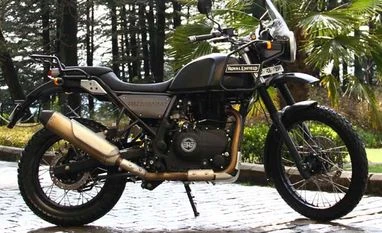 "Himalayan is capable of going 10,000 km without an oil change")