


Imagining an energy surplus future?
We may take indeterminate time to reach energy 'surplus' in a strict sense, though that does not preclude universal free access
 "Power transmission project")
premium
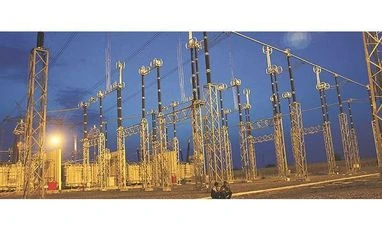
Last December, Sterlite Power won one of the largest power transmission projects in Brazil worth $800 million. | Photo: Company
Imagine a future with a surplus of energy, where a 100 per cent renewables-powered electricity grid harnesses the abundance of energy beamed down on us daily to give 100 per cent reliability of supply. This future will enable energy prices to be a fraction of what they are today, or perhaps even universally free. Let’s consider two milestones of our journey towards this future, one in the distant future; and the other more nearer-term for India and rather imminent.
The indications are that we’ll continue to find ever newer ways to consume energy. We may take indeterminate time to reach energy ‘surplus’ in a strict sense, though that does not preclude universal free access. Even if we developed the ability to absorb all the energy emitted by the sun — perhaps through the hypothesised Dyson Sphere and become a ‘Type 1 civilisation’ — tech advancements will likely hog whatever we produce. More likely, we’ll develop ships that are electric instead of solid-fuel run, and hyperloops to replace trains. Energy is like money, we will always find ways to consume it — our way of life will just change to match.
Today, however, India has an energy surplus with approximately 300 GW of installed capacity, and only 150 GW of peak demand. But this is a technical rather than a practical reality. There is still load shedding in most parts of the country after all, and our per capita consumption remains low because most people still have only limited access, in terms of both connectivity and availability of power. Further, we are a tropical country blessed with ample sunshine and wind, even in the monsoon months. In recent times, we still import much of our energy from abroad, notably in the form of oil and coal. The government is stressing on renewables and wants to transition us to a ‘solar nation’, in no small part to reduce the national import bill. Achieving this could accelerate the Make in India campaign because national energy-independence will mean the cheapest energy possible.
Once, we achieve national energy-independence, another equally fundamental development and national health challenge that needs to be addressed is our stark water distress. Cheap energy will allow unlimited pumping of water across vast distances, enabling this demon to finally be dispelled. Nascent water desalination technologies — which already exists, but are hamstrung by huge scaling costs — will then take off along the coast. Enabling pumping of clean water to the northern inlands, and onwards to other countries in similar need.
Technologies such as distributed energy generation and storage will take some pressure off the future central electricity grid — for example, by reducing the load on transmission infrastructure — there can be no such ‘distributed desalination’ equivalent for water. The oceans are fixed, so plants must remain coastal, or possibly at some suitable inland locations, such as Sambhar lake in Rajasthan. This will mean building significant new pumping infrastructure, with massive energy demands to fully serve the country.
The indications are that we’ll continue to find ever newer ways to consume energy. We may take indeterminate time to reach energy ‘surplus’ in a strict sense, though that does not preclude universal free access. Even if we developed the ability to absorb all the energy emitted by the sun — perhaps through the hypothesised Dyson Sphere and become a ‘Type 1 civilisation’ — tech advancements will likely hog whatever we produce. More likely, we’ll develop ships that are electric instead of solid-fuel run, and hyperloops to replace trains. Energy is like money, we will always find ways to consume it — our way of life will just change to match.
Today, however, India has an energy surplus with approximately 300 GW of installed capacity, and only 150 GW of peak demand. But this is a technical rather than a practical reality. There is still load shedding in most parts of the country after all, and our per capita consumption remains low because most people still have only limited access, in terms of both connectivity and availability of power. Further, we are a tropical country blessed with ample sunshine and wind, even in the monsoon months. In recent times, we still import much of our energy from abroad, notably in the form of oil and coal. The government is stressing on renewables and wants to transition us to a ‘solar nation’, in no small part to reduce the national import bill. Achieving this could accelerate the Make in India campaign because national energy-independence will mean the cheapest energy possible.
Once, we achieve national energy-independence, another equally fundamental development and national health challenge that needs to be addressed is our stark water distress. Cheap energy will allow unlimited pumping of water across vast distances, enabling this demon to finally be dispelled. Nascent water desalination technologies — which already exists, but are hamstrung by huge scaling costs — will then take off along the coast. Enabling pumping of clean water to the northern inlands, and onwards to other countries in similar need.
Technologies such as distributed energy generation and storage will take some pressure off the future central electricity grid — for example, by reducing the load on transmission infrastructure — there can be no such ‘distributed desalination’ equivalent for water. The oceans are fixed, so plants must remain coastal, or possibly at some suitable inland locations, such as Sambhar lake in Rajasthan. This will mean building significant new pumping infrastructure, with massive energy demands to fully serve the country.
Disclaimer: These are personal views of the writer. They do not necessarily reflect the opinion of www.business-standard.com or the Business Standard newspaper