


In Covid-19 fight, it's about fundamentals
Administrative response to Nipah or even the quick evacuation of Indian nationals from Wuhan shows the government can be responsive and effective when it wants to
 "coronavirus")
premium
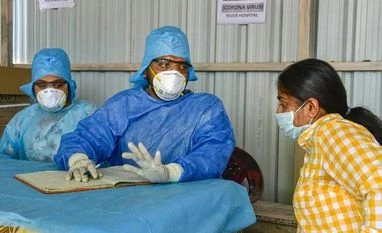
An Indian woman who recently returned from the United States being examined by doctors at a novel coronavirus help desk, at a hospital in Hyderabad
The novel coronavirus has globalised. And it is playing havoc. It has killed or sickened people in 73 countries. It has sent stock markets shivering. It has paralysed economic activity in China and parts of East Asia, the manufacturing engine of the world. It could potentially send the global economy into a severe downturn or recession. At this stage, around two months after the first outbreak in Wuhan, no one can confidently predict where this will end. However, what is clear is that fundamentals matter — for individuals, health systems and for the economy — even in the most unpredictable circumstances. It’s a useful reminder for India as the virus threatens to make its presence felt.
It may take some time before epidemiologists and clinicians fully understand Covid-19. Initial evidence suggests that an individual’s fundamental health parameters may be critical in determining the final impact of the disease. Those who are healthy have a much higher probability of experiencing mild illness and full recovery without hospitalisation. Those who have underlying health conditions are more likely to be severely ill. In India, the vulnerability is two-fold. At one end of the spectrum, there are the many who are malnourished and under-nourished in the low-income groups. At the other end, in the middle- and high-income groups, there’s the growing burden of lifestyle disease, such as diabetes, hypertension and coronary diseases.
It may take some time before epidemiologists and clinicians fully understand Covid-19. Initial evidence suggests that an individual’s fundamental health parameters may be critical in determining the final impact of the disease. Those who are healthy have a much higher probability of experiencing mild illness and full recovery without hospitalisation. Those who have underlying health conditions are more likely to be severely ill. In India, the vulnerability is two-fold. At one end of the spectrum, there are the many who are malnourished and under-nourished in the low-income groups. At the other end, in the middle- and high-income groups, there’s the growing burden of lifestyle disease, such as diabetes, hypertension and coronary diseases.
An Indian woman who recently returned from the United States being examined by doctors at a novel coronavirus help desk, at a hospital in Hyderabad
Disclaimer: These are personal views of the writer. They do not necessarily reflect the opinion of www.business-standard.com or the Business Standard newspaper