


Increasing infection
Govt should not get complacent about Covid management
 "Coronavirus, Covid, vaccine")
premium
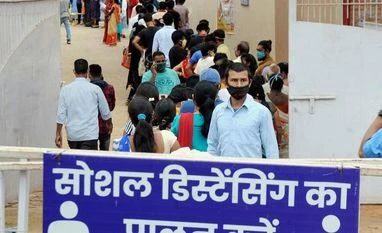
Beneficiaries wait in a queue to receive Covid-19 vaccine dose, at Birsa Munda Football stadium in Ranchi | Photo: PTI
India has not emerged from the threat of the pandemic and the threat of a third or even a fourth wave hovering over everybody. The distribution and intensity of a third wave will depend not just on vaccination rates but also on how the first and the second wave have played out. It is unfortunate, therefore, that the government has not worked hard enough to get reliable data on the spread of the virus and its effect on mortality. What is available is the Indian Council of Medical Research’s (ICMR’s) series of serosurveys, which sample the prevalence of antibodies for Covid-19 in the country. Headline data from the most recent round, the fourth, was released this week. ICMR surveys about 29,000 respondents in 700 villages and wards, from 70 districts in 21 states. The three previous serosurveys have seen an increasing incidence of antibodies among the respondents — from 0.73 per cent in May and June last year, to 7.1 per cent during August and September of 2020 and then 24.1 per cent in December and January. The fourth round, conducted in June and July, saw the seroprevalence after the second wave jump to 67.6 per cent. In other words, two-thirds of the respondents had antibodies to Covid-19, indicating they had been exposed to the disease or to the vaccine. That one-third are still without antibodies suggests that a third wave can potentially infect a lot of Indians. It would be unwise to expect that “herd immunity” thresholds are close to being reached as the delta variant, being more infectious, has significantly raised that threshold. So without a proper near-universal vaccination, herd immunity may be impossible.
Topics : Coronavirus Vaccination Coronavirus Vaccine ICMR