


John Lawrence and the railways
The Odisha famine of 1866-67 gave an impulse to Lawrence's policy of constructing railways and canals across the country
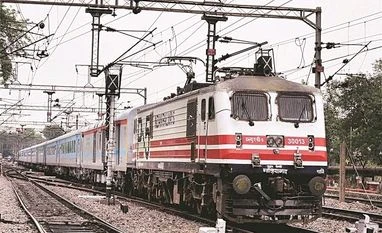 "Indian Railways")
premium
Change of track With Lawrence, the focus subtly shifted to the government from private players when it came to building rail links
John Lawrence was viceroy and governor general between 1864 and 1869. Recently, I came across a book published in 1882, titled Men and Events of My Time in India and authored by Richard Temple. Since Temple was private secretary to Lawrence for a few years, he wrote other books/monographs on Lawrence too. In Men and Events, Temple mentions a connection between Lawrence, railways and Odisha. “John Lawrence’s next trouble (after Bhutan) was the famine in Orissa, which probably caused him more grief than any other event during his rule…This misfortune gave an impulse to the policy which John Lawrence had desired from the outset to pursue, namely, that of hastening the construction of railways and canals. If the Government was to assume the responsibility, never fully assumed during former times in India, for saving the lives of a large population threatened with death from famine, there must be railways to carry the surplus grain from productive tracts, for replenishing the gaps which drought might cause in the supplies of other tracts.” This Odisha Famine of 1866-67 was severe and it has been estimated that one-third of the population died. The positive impact railway networks can have on distributing food in scarcity conditions was endorsed by later Famine Codes and Famine Commissions.
There is another link between Lawrence and Odisha. Let me quote from a Ph.D. dissertation submitted by Debadatta Pradhan to Pondicherry University. Lawrence died in 1879 and it isn’t surprising that a steamship was named after him. “In 1887, the campaign for an Odisha railway reached a new pitch when the Sir John Lawrence, a seagoing steamer that had left Calcutta for Puri with over eight hundred passengers, sank on 25 May due to the shipmaster’s irresponsible navigation and overloading of passengers. Hundreds of predominantly female pilgrims were drowned, many of whom were from well to do Calcutta bhadralok families. It was now that more widely distributed Bengal newspapers took the lead in the campaign and that the tone became more insistent.” The pilgrims were headed for Puri, with the steamship from Chotulal Ghat (Kolkata) to Chandbali. There is still a plaque in Chotulal Ghat (also known as Chotelal Ki Ghat) dedicated to those pilgrims. In addition to Indians, some Englishmen (crew) and Englishwomen (wives of officials) died. This explain why that plaque was erected by “English women”. From Chandbali (Chandabali) pilgrims went to Puri via Cuttack. Chandbali to Cuttack meant palanquins and bullock carts.
There was pressure (and petitions) for rail links between Calcutta and Madras through Odisha, with side lines to Puri. The wreck of “John Lawrence” reinforced this. Everything has a flip side. Once railways were built, Chandbali declined in importance. Bay of Bengal Pilot: Bay of Bengal and the Coasts of India and Siam, including the Nicobar and Andaman Islands, published by the US Hydrographic Office in 1916, said, “Chandbali, on the north bank of the Baitarani River, 20 miles from its mouth, has decreased in importance owing to the opening of the Bengal-Nagpur Railway, but still possesses a large trade; it is considered within the port of Dhamra.”
There is another link between Lawrence and Odisha. Let me quote from a Ph.D. dissertation submitted by Debadatta Pradhan to Pondicherry University. Lawrence died in 1879 and it isn’t surprising that a steamship was named after him. “In 1887, the campaign for an Odisha railway reached a new pitch when the Sir John Lawrence, a seagoing steamer that had left Calcutta for Puri with over eight hundred passengers, sank on 25 May due to the shipmaster’s irresponsible navigation and overloading of passengers. Hundreds of predominantly female pilgrims were drowned, many of whom were from well to do Calcutta bhadralok families. It was now that more widely distributed Bengal newspapers took the lead in the campaign and that the tone became more insistent.” The pilgrims were headed for Puri, with the steamship from Chotulal Ghat (Kolkata) to Chandbali. There is still a plaque in Chotulal Ghat (also known as Chotelal Ki Ghat) dedicated to those pilgrims. In addition to Indians, some Englishmen (crew) and Englishwomen (wives of officials) died. This explain why that plaque was erected by “English women”. From Chandbali (Chandabali) pilgrims went to Puri via Cuttack. Chandbali to Cuttack meant palanquins and bullock carts.
There was pressure (and petitions) for rail links between Calcutta and Madras through Odisha, with side lines to Puri. The wreck of “John Lawrence” reinforced this. Everything has a flip side. Once railways were built, Chandbali declined in importance. Bay of Bengal Pilot: Bay of Bengal and the Coasts of India and Siam, including the Nicobar and Andaman Islands, published by the US Hydrographic Office in 1916, said, “Chandbali, on the north bank of the Baitarani River, 20 miles from its mouth, has decreased in importance owing to the opening of the Bengal-Nagpur Railway, but still possesses a large trade; it is considered within the port of Dhamra.”
Change of track With Lawrence, the focus subtly shifted to the government from private players when it came to building rail links
Disclaimer: These are personal views of the writer. They do not necessarily reflect the opinion of www.business-standard.com or the Business Standard newspaper