


The Imperial Gazetteer on roads
Before the advent of British rule, roadways in the modern sense were practically unknown; and even after its establishment there were few to be found, except within urban limits
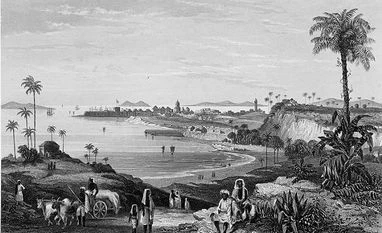 "Up to the end of the 18th century, there was no demand for prepared tracks even for military purposes, transport being chiefly effected by pack animals travelling along the village pathways, while travelers could ride or be conveyed in palanquins.")
premium
Up to the end of the 18th century, there was no demand for prepared tracks even for military purposes, transport being chiefly effected by pack animals travelling along the village pathways, while travelers could ride or be conveyed in palanquins.
Readers of this column are familiar with the name of Arthur Cotton. In 1854, he published a book titled “Public Works in India”. “There cannot be any greater proof of the evil consequences of doing things without any general investigation, than the history of communications in India up to this time, the desultory way in which the matter has been attended to, and the consequent failures and waste of money that we have seen. While the loss from want to communications was so great that there were a thousand ways and a thousand plans in which money might have been expended with the greatest advantage, perhaps crores of rupees have been thrown away from a total want of judgment in managing the expenditure. A sketch of our first attempts at road-making in the Madras Presidency, may be of great use as a guide, and a warning to us in our future proceedings. It was assumed that all that was necessary to successful road-making was, a given number of men with tools in their hands, headed by an officer taken at random from the line, and without any scientific qualifications whatever. Bodies of pioneers, thus equipped and commanded, were placed upon a line many hundreds of miles in length, and when it was found that but little impression could be made upon such a surface, the remedy was, to add thousands of coolies, and thus, besides the cost of the pioneers, lacs of rupees were wasted in an attempt to do by mere labour what could only be effected successfully by labour under the direction of science.” Sounds familiar.
Up to the end of the 18th century, there was no demand for prepared tracks even for military purposes, transport being chiefly effected by pack animals travelling along the village pathways, while travellers could ride or be conveyed in palanquins. (for representation purpose only)
Disclaimer: These are personal views of the writer. They do not necessarily reflect the opinion of www.business-standard.com or the Business Standard newspaper