


The legitimisation of vengeance
Instead of promoting the rule of law, the killing of rape suspects in Hyderabad sets a reprehensible precedent
 "Hyderabad encounter")
premium
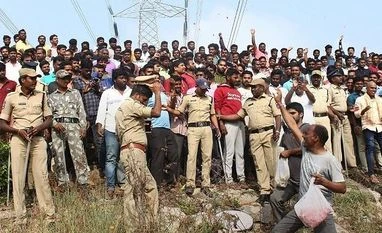
People shower flower petals and raise slogans in favour of police at the encounter site, where the four accused in the rape-and-murder case of a 25-year-old woman veterinarian were shot dead by police in Hyderabad | PTI
Amidst the vulgar outpouring of accolades for the Hyderabad Police killing four rape suspects in an “encounter”, it was reassuring to hear the Hon’ble Chief Justice of India sounding a note of caution. While acknowledging the need for swift and efficient justice, he said: “But I don’t think justice can ever be or ought to be instant and justice must never ever take the form of revenge. I believe justice loses its character of justice if it becomes revenge.”
Put this alongside the statement reportedly made by the Telangana Chief Minister, K Chandrasekhar Rao, who claimed that the encounter is a “message for the entire country.” He justified the encounter killing by pointing to “pressure for immediate action”. It was doubtful, he said, if justice would have been served through courts since the “Indian judicial process will go on forever.” The Telangana government, far from distancing itself from this illegal act, publicly took credit for it even suggesting that the encounter killing had the sanction of the state political leadership. Even the pretence of this being a case of security forces firing in self-defence has been abandoned. The criminal justice system has to be made more responsive and policing of our streets must be made more effective, but to avoid the hard work and urgent reforms this requires in favour of arbitrary dispensation of punishment is reprehensible and dangerous. Those who belittle the criminal justice system are themselves responsible for its infirmities. In 2006, the Supreme Court had directed the central and state governments to “set up authorities to lay down guidelines for police functioning, evaluate police performance, decide postings and transfers and receive complaints of police misconduct.” These directives remain a dead letter. Politicians regard the police as instruments of patronage and for targeting rivals. There has been a steady erosion of professionalism and a sense of public service not only among the police but in the governance system in general.
India has one of the lowest density of police personnel in relation to its population. The sanctioned strength is 181 per 100,000 but the actual number in place is 137. The UN norm is 222. The quality of personnel is poor and declining. In Telangana, where the horrifying rape and killing occurred, the vacancy rate is 26 per cent against the national rate of 24 per cent. And political leaders who are screaming the loudest about protecting our women go around with a security complement which often run into hundreds. This includes several Members of Parliament who have cases of rape and murder pending against them. Should they be subjected to summary justice on grounds that the “Indian judicial process will go on forever”?
Put this alongside the statement reportedly made by the Telangana Chief Minister, K Chandrasekhar Rao, who claimed that the encounter is a “message for the entire country.” He justified the encounter killing by pointing to “pressure for immediate action”. It was doubtful, he said, if justice would have been served through courts since the “Indian judicial process will go on forever.” The Telangana government, far from distancing itself from this illegal act, publicly took credit for it even suggesting that the encounter killing had the sanction of the state political leadership. Even the pretence of this being a case of security forces firing in self-defence has been abandoned. The criminal justice system has to be made more responsive and policing of our streets must be made more effective, but to avoid the hard work and urgent reforms this requires in favour of arbitrary dispensation of punishment is reprehensible and dangerous. Those who belittle the criminal justice system are themselves responsible for its infirmities. In 2006, the Supreme Court had directed the central and state governments to “set up authorities to lay down guidelines for police functioning, evaluate police performance, decide postings and transfers and receive complaints of police misconduct.” These directives remain a dead letter. Politicians regard the police as instruments of patronage and for targeting rivals. There has been a steady erosion of professionalism and a sense of public service not only among the police but in the governance system in general.
India has one of the lowest density of police personnel in relation to its population. The sanctioned strength is 181 per 100,000 but the actual number in place is 137. The UN norm is 222. The quality of personnel is poor and declining. In Telangana, where the horrifying rape and killing occurred, the vacancy rate is 26 per cent against the national rate of 24 per cent. And political leaders who are screaming the loudest about protecting our women go around with a security complement which often run into hundreds. This includes several Members of Parliament who have cases of rape and murder pending against them. Should they be subjected to summary justice on grounds that the “Indian judicial process will go on forever”?
illustration: Binay Sinha
Disclaimer: These are personal views of the writer. They do not necessarily reflect the opinion of www.business-standard.com or the Business Standard newspaper
Topics : fake encounters police violence