


The poverty challenge
High, sustainable, and inclusive growth is the only answer
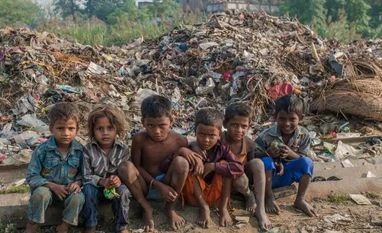 "poverty, poor, children, food")
premium
Photo: Shutterstock
The release of the United Nations Development Programme’s (UNDP’s) annual report on multi-dimensional poverty is an appropriate point to evaluate India’s progress on poverty reduction. As the report underlines, it is an impressive achievement. The UNDP had previously found that India had lifted 271 million people out of poverty between 2005-06 and 2015-16. The latest, the 2019 report, further fleshed out how this was achieved. Multi-dimensional indicators recognise that poverty is about more than just access to income: It is also about access to resources and capabilities to improve individual prospects. Thus, 10 indicators go into constructing the multi-dimensional poverty index, including nutrition; schooling; access to fuel, power, and drinking water; sanitation; electricity; housing; and child mortality. What is impressive about India’s performance in the decade to 2015-16 is not just the scale of the achievement but also how all-encompassing it was. For one, India was one of the few countries to show a significant decrease on all the 10 indicators. In addition, the report says that “poverty reduction in rural areas outpaced that in urban areas — demonstrating pro-poor development”. It added that “India demonstrates the clearest pro-poor pattern at the sub national level: the poorest regions reduced multidimensional poverty the fastest”. India also saw that the poorest 40 per cent of the population had the greatest relative improvement in their multi-dimensional capabilities — measured both in terms of size, intensity and inclusiveness, India’s poverty reduction effort stands out in global terms.
Topics : Poverty in India