


Unsatisfactory progress
Air quality in the capital remains unhealthy
 "Delhi air quality")
premium
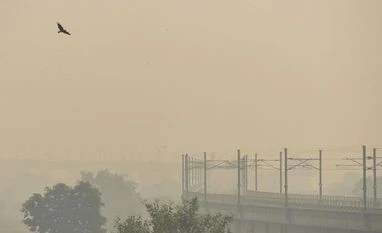
Delhi metro running amid dense haze and low visibility, in New Delhi. Photo: PTI
The Delhi government’s contention that air pollution during this Diwali was the lowest in the past five years, though backed by credible data, provides only cold comfort. An analysis of the Air Quality Index (AQI) numbers for recent years indeed shows that the air’s content of PM 2.5 (the most harmful tiny pollutants) averaged around 289 on the Diwali day this year, against 958 in 2016, 497 in 2017, and 482 in 2018. Besides, the AQI bulletin of the Central Pollution Control Board also did not list Delhi among the country’s top 10 most polluted cities. In fact, the metropolis is placed only at number 13, with its satellite towns like Noida and Ghaziabad figuring among the top five. This could have been a matter of satisfaction but for the fact that the air quality still fell in the “very poor” to “severe” category with the concentration of pollutants being 16 to 18 times higher than the safe limits, at different times of the day. Thus, the fight against air pollution is still a work-in-progress and there is no room for any laxity.