


Story in numbers: Fight against terrorism
The surgical strikes, or foray into Pakistan by special forces, were touted as revenge for the Uri attack
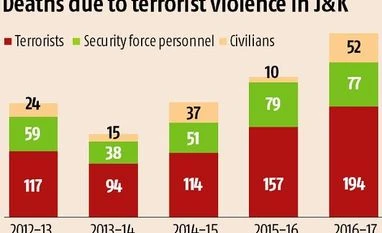 "graph")
premium
Source: South Asia Terrorism Portal
A little more than a year ago, on September 29, 2016, the Indian Army crossed the Line of Control (LoC) into Pakistan-occupied Kashmir (PoK) to carry out “surgical strikes” on terrorist “launch pads,” Director General of Military Operations Lt General Ranbir Singh had announced. The surgical strikes, or foray into Pakistan by special forces, were touted as revenge for the Uri attack.
“The operations were focused to ensure these terrorists do not succeed in endangering the lives of citizens in our country. During the counter-terrorist operations, significant casualties have been caused to the terrorists,” Singh had said.
“The operations were focused to ensure these terrorists do not succeed in endangering the lives of citizens in our country. During the counter-terrorist operations, significant casualties have been caused to the terrorists,” Singh had said.
Source: South Asia Terrorism Portal