


<b>Harminder Sahni</b>: Digital money will become mainstream for retailers
Unified product interface will cut cost of digital money transaction to almost negligible
 "Digital technology")
premium
Technologies like unified product interface will cut the cost of digital money transaction to almost negligible
With every passing year the role of technology is increasing rapidly in all aspects of retail business. From basic PoS (point of sales) to warehousing management systems to barcoding and many incremental but significant developments and ecommerce, the impact of technology in the evolution of modern retail is immense. Looking ahead at 2017, I would like to mention some significant changes technology may bring about in online and offline retail.
One consumer one view: Millions of consumers with smartphones are either shopping on phone apps or are making payments with apps. The presence of the mobile-wielding masses and their willingness to interact and transact with brands and retailers is an unprecedented opportunity. Retailers not only know their brand preferences, sweetest price points and favourite shopping time but also their location along with their social life activities. This 360-degree view is going to change the way retailers connect with the consumers for consumer potential maximisation.
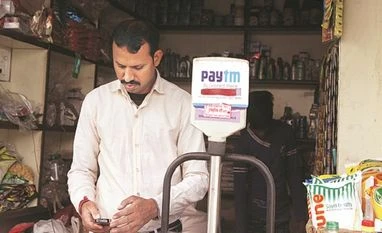
Digital money: Even before the recent demonetisation digital money had started changing the way consumers pay at all kinds of retail stores. This mode of payment will allow traditional retailers to offer convenient options to consumers and open up possibilities of technology penetration in their business. PoS and digital payment can be a harbinger to stock management systems and even to auto ordering and replenishment from connected suppliers. Technologies like UPI will cut the cost of digital money transaction to almost negligible and drive hordes of traditional retailers to embrace this.
Big data: The amount of data that online retailers have been gathering in the last few years has now reached a critical mass level to allow them to implement “mass customisation” of their ever-growing catalogues and “101 marketing” far more effectively. Consumers will love the fact that they are not only being shown what they were looking for and were unable to find or coordinate but also that they are receiving promotional offers that they could actually use. These ideas will create a real USP for online retailers.
Single point stock and multi-channel distribution: One of the biggest challenges of any retailer has been to ensure maximum number of turns for their inventory and also to not lose sale because of stock out at one place while offering discount on the same item somewhere else. How retailers wish that they could have visibility of inventory anywhere in the system — not only for themselves but also directly for the consumers! While the technology to offer this has been around for some time mostly it was being utilised to offer same items at multiple online marketplaces. The real fun will start now, as many online retailers are going offline and most offline brands will go online. Consumers have always been shopping or are open to shop across channels. Now brands and retailers will be able to complete this link to their advantage.
Artificial intelligence (AI) and virtual reality (VR) becoming real: The pace of development and evolution of these technologies has quickened in the last couple of years and these are becoming mainstream. Retailers have started experimenting with these in customer service where customers can chat with a bot to not only get answers of queries but also seek recommendations. Be it trying clothes, shoes or test driving a car, VR will become the first port of call.
One consumer one view: Millions of consumers with smartphones are either shopping on phone apps or are making payments with apps. The presence of the mobile-wielding masses and their willingness to interact and transact with brands and retailers is an unprecedented opportunity. Retailers not only know their brand preferences, sweetest price points and favourite shopping time but also their location along with their social life activities. This 360-degree view is going to change the way retailers connect with the consumers for consumer potential maximisation.
Digital money: Even before the recent demonetisation digital money had started changing the way consumers pay at all kinds of retail stores. This mode of payment will allow traditional retailers to offer convenient options to consumers and open up possibilities of technology penetration in their business. PoS and digital payment can be a harbinger to stock management systems and even to auto ordering and replenishment from connected suppliers. Technologies like UPI will cut the cost of digital money transaction to almost negligible and drive hordes of traditional retailers to embrace this.
Big data: The amount of data that online retailers have been gathering in the last few years has now reached a critical mass level to allow them to implement “mass customisation” of their ever-growing catalogues and “101 marketing” far more effectively. Consumers will love the fact that they are not only being shown what they were looking for and were unable to find or coordinate but also that they are receiving promotional offers that they could actually use. These ideas will create a real USP for online retailers.
Single point stock and multi-channel distribution: One of the biggest challenges of any retailer has been to ensure maximum number of turns for their inventory and also to not lose sale because of stock out at one place while offering discount on the same item somewhere else. How retailers wish that they could have visibility of inventory anywhere in the system — not only for themselves but also directly for the consumers! While the technology to offer this has been around for some time mostly it was being utilised to offer same items at multiple online marketplaces. The real fun will start now, as many online retailers are going offline and most offline brands will go online. Consumers have always been shopping or are open to shop across channels. Now brands and retailers will be able to complete this link to their advantage.
Artificial intelligence (AI) and virtual reality (VR) becoming real: The pace of development and evolution of these technologies has quickened in the last couple of years and these are becoming mainstream. Retailers have started experimenting with these in customer service where customers can chat with a bot to not only get answers of queries but also seek recommendations. Be it trying clothes, shoes or test driving a car, VR will become the first port of call.
Founder and managing director, Wazir Advisors