


China's 'unauthorised past'
Johnson's book takes its title from Spark, a journal cobbled together in 1960 by a band of exiled university students who had been sent to the same labour camp in the late 1950s
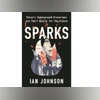 "Book")
SPARKS: China’s Underground Historians and Their Battle for the Future
Author: Ian Johnson
Publisher: OUP
Pages: 381
Price: $27.95
Also Read

By now, it is almost clichéd to compare political misrule to the dystopia that Orwell conjured through the story of the low-ranking functionary Winston Smith in 1984, but so many aspects of the novel have come true in today’s China — from mass surveillance to fury-inciting demagogy to President Xi Jinping’s declaration that the Communist Party’s rule is “the conclusion of history” — that it may appear to preclude the possibility of resistance.
Smith’s first act of betrayal was to document a past that dared to deviate from propaganda. His second — and far more fatal one — was his attempt to find other people with a similarly impractical interest in preserving the unauthorised past. These twin offences also drive the cast of characters in Ian Johnson’s Sparks, an intimate and compelling portrait of China’s underground
history movement.
Johnson’s book takes its title from Spark, a journal cobbled together in 1960 by a band of exiled university students who had been sent to the same labour camp in the late 1950s after offering minor criticisms of the party. Many of them were loyal Communists. They soon began to recognise, to their horror, that the party was not erecting a utopian state so much as a brutally totalitarian one.
The journal’s brief run — the group published only two issues — would cost several of its founders their lives but it was also real proof of something the fictional Smith never lived to see: an alliance of truth-seekers who were capable, however briefly, of making something larger than themselves.
Johnson, a Pulitzer Prize-winning journalist who spent more than two decades reporting in China, is clear-eyed about the stranglehold of Chinese authoritarianism that has only tightened in the Xi era, and so are the courageous filmmakers, journalists and intellectuals whose life stories he traces.
There is Lin Zhao, the propagandist turned counterrevolutionary whose verses inspired the creation of Spark, which takes its title from a Chinese idiom, xinghuo liaoyuan, meaning “a single spark can start a prairie fire”; for the crime of criticising Mao Zedong’s government, she would be imprisoned and executed in the 1960s, during the height of the Cultural Revolution. There is Hu Jie, the independent filmmaker who would make a documentary about Lin entitled “Searching for Lin Zhao’s Soul” 36 years after her death.
In a dictatorial regime, access to the past is so tightly policed that, even for those brave enough to look, history is oftentimes unearthed unexpectedly, partially and only through happenstance. After her father died, the Tibetan writer Tsering Woeser found the negatives of 400 photos that he had taken during the Cultural Revolution. “When she held them up to the light,” Johnson writes, she saw “people being humiliated and beaten” and “zealots destroying Tibetan temples.” Her father had annotated the pictures but never told his daughter about them.
The writer Yang Xianhui was barely a teenager in the late 1950s when Mao’s purges sent political prisoners to work and die in Jiabiangou, the most notorious labour camp in China. Years later, working on a collective farm in the countryside nearby, he began to hear about the survivors. After gathering more than 100 interviews, he crafted lightly fictionalised versions of some of their stories and eventually published them in 2000.
“It was not by making yourself heard but by staying sane that you carried on the human heritage,” Smith believed at the outset of 1984. But the underground historians Johnson profiles knew as well as Orwell that sanity can hardly be preserved in a world without transmission and exchange of voices and vision, through both space and time.
The hard-won realisation rarely gives way to delusional optimism. In an influential essay from 1996, the cultural critic Wang Xiaobo explains that his reluctance to speak makes him a member of what he calls “the silent majority” in China. “I could not trust those who belonged to the societies of speech,” Wang wrote. But that is exactly why “I have a duty to speak of what I have seen and heard.”
Wang’s words explain the efforts of Tan Hecheng, an editor who stumbled onto the story of a party-led massacre in Hunan Province in 1967 that took the lives of 9,000 innocents. Tan devoted 40 years of his life to researching the story of the systemic murders, finally publishing a book called The Killing Wind in 2010. “Documenting this wasn’t quixotic,” Johnson writes. “It was a hard-nosed calculation that it would pay off — not for Tan personally but for his country.”
A decade ago, the filmmaker Ai Xiaoming travelled 1,500 miles from her home in Wuhan to record an effort by aging camp survivors to erect a tombstone where the labour camp stood. The footage is captured without a tripod and the camera work is jerky. “It could be seen as amateurish,” Johnson writes. “But for Ai and other underground filmmakers it is a sign of authenticity.”
Centuries from now, someone might find Ai’s shaky underground filmmaking on a hard drive or in the cloud. “And that person will try to figure out what it was used for,” Johnson muses. “Could the film itself be a kind of cemetery that people in the 21st century built to commemorate their dead?” It might also serve as a solitary spark, preserved in space and time, one that could ignite a prairie fire.
The reviewer is a staff writer at The New Yorker ©2023 The New York Times News Service
Topics : China BS Reads BOOK REVIEW
Don't miss the most important news and views of the day. Get them on our Telegram channel
First Published: Oct 01 2023 | 9:52 PM IST