


Tiny Experiments: How linear careers limit learning and adaptability
Why linear careers deliver promotions, titles, money, and prestige - but often at the cost of curiosity, learning, and adaptability
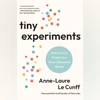 "Tiny experiments: How to live freely in a goal-obsessed world")
premium
Tiny experiments: How to live freely in a goal-obsessed world
5 min read Last Updated : Jan 22 2026 | 10:38 PM IST
Listen to This Article
Tiny experiments: How to live freely in a goal-obsessed world
By Anne-Laure Le Cunff
Published by Hachette India
298 pages ₹499
When author Anne-Laure Le Cunff, who grew up in Paris, landed a coveted job at Google in San Francisco, her parents were thrilled. It offered all the perks of working at a top tech firm — money, travel, and the approval of family and friends. She plunged in with energy and enthusiasm. Then, doubts surfaced. Her youth had been a quest for learning and growth. But now her life had been reduced to meeting KRAs (key result areas) and climbing a predefined corporate ladder. Soon she felt bored and burnt out. To her manager’s surprise and her mother’s dismay, she quit.
Instead of pausing to reflect, she plunged into founding a tech startup in Europe. When that, too, failed, she felt unmoored. Soon, however, the disorientation gave way to an unexpected feeling of liberation. Not having a defined path opened up a world of possibilities. She reacquainted herself with an old ally — curiosity — paying attention to conversations that energised her and ideas that attracted her. She took online courses, attended workshops, read for pleasure, and freelanced to stay afloat.
Over time, a clear thread emerged: She wanted to understand the human brain. She went back to college to study neuroscience. Alongside her studies, she began running small experiments on her life, guided by a simple question: What might bring fulfilment, regardless of outcome? She loved writing, so she made a pact with herself to write and share 100 articles in 100 workdays. She completed the challenge and kept going. Her newsletter—named Ness Labs — has a massive readership and has since evolved into a learning platform focused on helping knowledge workers think better and work and live more mindfully.
Ms Cunff’s central point is that people pursue linear careers and SMART (specific, measurable, achievable, relevant, and time-bound) goals. This framework assumes that life is predictable with clear steps and known destinations. But modern careers rarely pan out that way. Companies restructure, and the ladders one planned to climb disappear. In such a world, rigid plans can become paralysing.
While linear paths can deliver promotions, titles, money, and prestige, these often come at a cost: Curiosity, learning, and adaptability become casualties. Overemphasis on continuity makes reinvention harder, leaving people ill-prepared to pivot when opportunities arise in new areas.
The alternative she suggests is to live the “experimental life”: A deliberate commitment to engage with uncertainty rather than resist it. Small experiments, she suggests, can generate data about what energises you and what drains you. Over time, such feedback can help one align choices more closely with evolving values and interests. The payoff is fulfilment, lateral growth, and resilience. Foraying into fresh disciplines and developing new skills expands capacity and enables one to adapt more easily to a fast-changing world.
Ms Cunff outlines detailed steps to help readers embark on the experimental path. She suggests treating life as a field site, as anthropologists do. Observe yourself with curiosity rather than judgement, and capture insights in the moment. Note what intrigues, energises, or unsettles you. Track patterns of energy, mood, and emotional responses.
From these notes, form a hypothesis: If I do X, will I feel more energised? Then turn it into a pact — a clear, time-bound commitment to an action. Keep the format plain: “I will do [action] for [duration].” For example, “I will run two kilometres a day for the next 10 days”. Success here is not hitting a target; it is showing up. Every outcome is data that informs the next experiment. The author suggests keeping pacts simple, repeatable, realistic, and binary — done or not done. Have short timeframes for each pact. Avoid running multiple pacts at once. Share the pact with friends or colleagues to create accountability. When the pact ends, close the loop: Reflect on what worked, what should be modified, what should be expunged from your life, and what should be explored next.
Ms Cunff exhorts readers to keep experiments tiny. Large commitments trigger fear, overthinking, and procrastination. Overestimating what can be accomplished and underestimating the effort required are common pitfalls. Big experiments also create the same pressures as linear goals. Tiny experiments, by contrast, lower the barrier to starting. They can be done with limited resources and sustained even on days of low energy. Writing 300 words a day for a month, for instance, is far more doable than committing to writing a book in 2026. Small trials feel safer because they cost little, and even “failure” provides useful learning rather than becoming a source of discouragement.
The author does not suggest that everyone should quit stable jobs or take reckless leaps. After all, most people have families to support and bills to pay. Her point is more practicable: Conduct low-cost experiments to generate insights, open up new vistas, and grow into a richer, more variegated version of yourself.
Topics : Learning Book reading BOOK REVIEW BS Reads