


Bid to address material intensity in renewables, cross-subsidy in power
Cross-subsidisation involves charging higher tariffs to industrial and commercial power consumers to offset lower tariffs for domestic and agricultural users
 "Energy, Solar energy, Wind Energy")
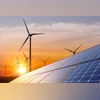
Economic Survey flags cross-subsidies and capital-heavy renewables as key hurdles for India’s energy sector, urging tariff reforms and stronger infrastructure to sustain power growth. (Photo: Shutterstock)
Listen to This Article
The Economic Survey 2025-26 tabled in Parliament on Thursday highlighted two big issues that must be addressed urgently for the growth of India's energy sector. They include high levels of cross subsidy in power supply and the huge material and capital intensity associated with renewable energy projects..
Cross-subsidisation involves charging higher tariffs to industrial and commercial power consumers to offset lower tariffs for domestic and agricultural users.
This is structured through category-wise subsidies, where the average billing rate for the former category exceeds the average cost of supply (ACoS), while the latter pays below ACoS.
“Going forward, a balanced approach could include rationalising tariffs for subsidised categories by introducing phased rates and quotas, as well as voluntary and category-based exclusions,” the Survey said.
The Electricity Act requires State Electricity Regulatory Commissions to progressively reduce cross subsidies in tariffs to ensure that they reflect the cost of supply.
Also Read

 "Indian economy, manufacturing")
 "Unified Payments Interface, UPI, UPI Payment")
 "Illustration: Binay Sinha")
 "trading, markets")
 "Mishra said clean energy is no longer a sectoral agenda and is central to growth, competitiveness, social inclusion, and energy security.")
However, in some states, for certain categories, ACoS coverage exceeds the ±20 per cent limit specified in the tariff policy.
The Survey said in order to tackle this issue, the government last month introduced the Electricity (Amendment) Bill, 2025, to address deep-rooted inefficiencies, alleviate financial strain on the power sector, promote competition, and optimise network costs across the power distribution sector.
The Bill aims to transform the existing market structure by rationalising cross-subsidies, promoting cost-reflective tariffs, and enabling direct power procurement by industrial users.
It mandates that the tariff must reflect the cost of supplying electricity and the cross-subsidies paid by manufacturing enterprises, railways, and metro railways must be eliminated within five years.
Highlighting the success of power reforms, the Survey said ₹1.85 trillion has been invested to boost distribution infrastructure across various states. And, projects worth ₹2.8 trillion have been approved to improve power supply and implement smart metering solutions under the Revamped Distribution Sector Scheme (RDSS).
On the renewable energy front, the Survey said the first eight months of 2025-26 recorded a historic 34.56 Gigawatt (Gw) capacity addition, the largest ever annual increase in non-fossil capacity, led by solar power.
However, several challenges, including high capital costs, land acquisition delays, and grid availability need to be addressed along with integration of Battery Energy Storage Systems (BESS) and Pumped Storage Hydropower (PSP).
The Survey also said the renewable energy systems of solar and wind are highly material-intensive and require capital-intensive energy storage technologies for integrating renewable energy into the energy grid.
“Material and storage requirements represent the two roadblocks to greater utilisation of these energy sources,” the Survey added.
Highlighting the huge material and energy required for producing renewable energy equipment, the Survey said solar panels with a power capacity of 1 Gw require 18.5 tonnes of silver, 3,000 tonnes of polysilicon, and 10,252 tonnes of aluminium.
“To make 1 Gw, 18.5 tonnes of silver, 4,625 MWh (18.5 × 250 MWh) is nearly the equivalent of the yearly electricity consumption of 350-400 US households,” it said
It added that the world will soon run short of copper at the current rate of rising power demand, in part due to the proliferation of artificial intelligence (AI) data centres.
The Survey also said while India has reduced its emission intensity by 36 per cent since 2005 and achieved 50 per cent non-fossil power capacity, climate finance remains skewed towards mature sectors. They include solar and wind, even as critical segments like micro, small and medium enterprises, urban infrastructure, and hard-to-abate industries remain underfunded.
More From This Section
 "women, women employees")
 "Corporate, companies")
 "MSME")
 "manufacturing sector, economy")
 "health insurance")
Don't miss the most important news and views of the day. Get them on our Telegram channel
First Published: Jan 29 2026 | 5:06 PM IST