


Geopolitics in cricket: When top teams forfeit World Cup matches in past
Business Standard takes a look at three notable occasions when geopolitical realities shaped World Cup outcomes, with teams forfeiting matches and points.
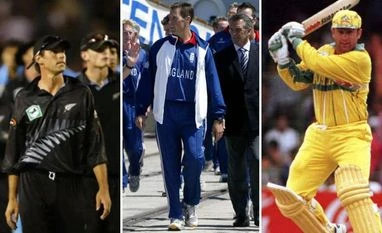 "when england newzealand australia and west indies forfeit cricket world cup matches in past")
When England, New Zealand, Australia and West Indies forfeit cricket world cup matches in the past. Photo: Reuters
Listen to This Article
With reports suggesting that the International Cricket Council (ICC) has turned down the Bangladesh Cricket Board’s (BCB) request to shift its ICC Men’s T20 World Cup matches out of India, uncertainty looms over Bangladesh’s participation in the global event. The development has revived memories of past instances when geopolitical tensions spilled over into cricket, forcing teams to forfeit World Cup matches rather than take the field.
Bangladesh are scheduled to play all four of their group matches in India. If the BCB sticks to its reported stance of not sending the team across the border, the Bangla Tigers could be compelled to forfeit their fixtures, effectively exiting the tournament without playing a ball. While the ICC is yet to issue an official statement, history suggests that the global governing body has rarely altered World Cup venues in response to political or security objections, leaving teams to choose between participation and withdrawal.
Business Standard takes a look at three notable occasions when geopolitical realities shaped World Cup outcomes, with teams forfeiting matches and points.
New Zealand vs Kenya, 2003 World Cup
- Teams involved: New Zealand, Kenya
- What happened: New Zealand forfeited their group match
- Geopolitical tension point: Security concerns and terror threats
During the 2003 Cricket World Cup, New Zealand withdrew from their group-stage match against Kenya, scheduled to be played in Nairobi on February 21. The decision followed travel advisories issued by the New Zealand government warning of heightened terrorist threats in Kenya, which was then grappling with security challenges in the aftermath of attacks on Western targets.
Also Read

 "Jay Shah")


Citing player safety as paramount, New Zealand Cricket chose not to travel, despite the ICC’s insistence that security arrangements met tournament standards. The governing body refused to relocate the fixture to a neutral venue, such as South Africa, which was also hosting matches in the tri-nation World Cup.
As a result, Kenya were awarded the points without playing the match. The forfeiture proved pivotal, helping the associate nation qualify for the semi-finals — a landmark achievement that remains one of the most remarkable stories in World Cup history.
England vs Zimbabwe, 2003 World Cup
- Teams involved: England, Zimbabwe
- What happened: England boycotted the match
- Geopolitical tension point: Political repression and human rights concerns
The 2003 World Cup also witnessed England boycotting their group-stage match against Zimbabwe, scheduled for February 13 in Harare. Unlike New Zealand’s security-driven withdrawal, England’s decision was rooted in both safety fears and moral opposition to the political situation under President Robert Mugabe.
At the time, Zimbabwe was facing international condemnation for alleged human rights abuses, political violence, and suppression of dissent. England’s players, backed by the England and Wales Cricket Board, expressed concerns over death threats and the volatile political climate, leading to the unprecedented decision to refuse to play.
The ICC again declined to move the fixture, awarding Zimbabwe the points. England’s forfeiture contributed to their early exit from the tournament, underlining the competitive cost of political stand-offs in elite sport.
The political backdrop was further highlighted when Zimbabwean players Andy Flower and Henry Olonga wore black armbands during matches to protest the “death of democracy” in their country — a rare act of political expression on the cricket field that drew global attention.
Australia and West Indies vs Sri Lanka, 1996 World Cup
- Teams involved: Australia, West Indies, Sri Lanka
- What happened: Two matches forfeited by visiting teams
- Geopolitical tension point: Civil conflict and terrorism fears
One of the earliest and most consequential examples of geopolitics influencing a Cricket World Cup came in 1996, when Australia and the West Indies refused to play their group matches in Sri Lanka. The tournament was co-hosted by India, Pakistan and Sri Lanka, but concerns escalated after a bomb blast in Colombo in January that year, attributed to the Liberation Tigers of Tamil Eelam (LTTE), killed more than 90 people.
Australia cited fears of a potential suicide attack targeting the team, while the West Indies echoed similar concerns. Despite assurances from Sri Lankan authorities and the ICC regarding security arrangements, both teams declined to travel.
Sri Lanka were awarded full points for both matches, allowing them to progress to the quarterfinals without playing those fixtures. In a twist of sporting irony, Sri Lanka, led by Arjuna Ranatunga, went on to win the tournament, defeating Australia in the final to claim their maiden World Cup title.
Lessons for the present
These precedents underline a consistent pattern: when geopolitical or security tensions intersect with World Cup cricket, the ICC has historically prioritised fixed schedules and host commitments over venue changes. Teams unwilling to comply have been left with little choice but to forfeit matches, often at significant competitive cost.
As uncertainty surrounds Bangladesh’s participation in the upcoming T20 World Cup fixtures in India, the past suggests that any decision to stay away could have irreversible consequences. While cricket continues to project itself as a unifying global sport, history shows that geopolitics has repeatedly found a way onto the scorecard.
More From This Section
 "ICC Chairman Jay Shah at Lord's")
 "Pat Cummins")
 "Pakistan Cricket Board, PCB")

 "Mustafizur Rahman, Shashi Tharoor")
Don't miss the most important news and views of the day. Get them on our Telegram channel
First Published: Jan 07 2026 | 11:11 AM IST