


Ashes 2025-26: Cummins ruled out, Smith to lead Aussies vs England in Perth
Pat Cummins' recovery timeline now makes him a doubtful starter for the second Test at the Gabba on December 4.
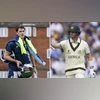 "Pat Cummins and Steve Smith")
Steve Smith to lead Australia in first Ashes Test vs England in Pat Cummins absence. Photo: PTI
Listen to This Article
Australia’s preparations for the Ashes have been dealt a major blow, with captain Pat Cummins officially ruled out of the first Test in Perth starting November 21. Vice-captain Steve Smith will step in to lead the side in what promises to be a fiery start to the five-match series against England.
Why the story matters
Pat Cummins’ absence from the series opener not only disrupts Australia’s rhythm but also reignites the debate over fast-bowler workload management — a recurring issue in modern cricket. Cummins, who has been out of action since sustaining a back stress injury during the Caribbean tour in June, has yet to resume bowling. His recovery timeline now makes him a doubtful starter for the second Test at the Gabba on December 4.
“It’s unfortunate, but we’ve run out of time,” admitted head coach Andrew McDonald. “We were hoping to get him up and running for Perth, but we’re really optimistic about his return for the second Test. He’ll be back bowling this week — that’s a huge step forward.”
Also Read

 "Pat Cummins")
 "stock market rally, market rise")
 "Nithin Kamath, Zerodha CEO")
 "Russian President Vladimir Putin speaks, as he visits the army command centre in the course of the Russia-Ukraine conflict, in an unidentified location on October 26, 2025 (Photo: Reuters)")
 "The number of active investors on the National Stock Exchange (NSE) have jumped 44 per cent over the past one year to 47.9 million at the end of September 2024. The surge in active clients is underpinned by the rally in the markets, with the Nifty 50")
Cummins will still travel with the team to Perth, with McDonald confirming his presence in the dressing room. “Patty will be around the group. You’ll probably look at him and wonder why he isn’t playing — that’s how close he’ll be,” McDonald added.
Big picture: The captaincy circle comes full turn
Smith’s return to captaincy comes at a pivotal juncture. Having led Australia in 40 Tests, the prolific batter has a formidable record — averaging nearly 70 as captain, compared to 50 when not leading. His calm authority and proven tactical acumen make him the natural choice to steer Australia through a high-stakes opener.
Smith last captained Australia in February, guiding them to a commanding 2–0 series win in Sri Lanka. His reinstatement underscores the selectors’ trust in experience over experimentation — a move aimed at ensuring stability against an England side hungry to reclaim the urn.
Cummins’ race against time
The injury to Cummins — his second significant back issue in recent years — raises familiar concerns about the physical toll on fast bowlers in multi-format cricket. Cricket Australia confirmed that while he has resumed running, bowling workloads remain a risk factor. With the Ashes schedule packed closely together, the management is unwilling to gamble on his long-term fitness.
If Cummins returns for the second Test in Brisbane, it would offer a timely boost, but much will depend on how his body responds to bowling drills over the next fortnight.
Squad adjustments and selection outlook
Scott Boland is the frontrunner to replace Cummins in the XI. The Victorian pacer’s home record is outstanding — averaging 12.63 with the ball — and his unforgettable 6 for 7 against England at the MCG in the 2021-22 Ashes remains etched in memory.
There is also encouraging news for all-rounder Cameron Green, who has recovered from side soreness that kept him out of the recent ODI series against India. Green is set to play for Western Australia in the Sheffield Shield, though his bowling clearance is still pending.
Why this matters
Beyond individual absences, the development reflects the depth and resilience of Australian cricket. The transition from Cummins to Smith — two vastly different yet equally respected leaders — offers a fascinating subplot to the series. It also highlights how Australia’s approach to player welfare has evolved: rest and rehabilitation now take precedence over short-term risk.
As the Ashes countdown begins, the script is layered with intrigue. Cummins’ shadow will loom over Perth, but Smith’s leadership promises no let-up in intensity. For Australia, the mission remains the same — retain the urn, restore dominance, and ensure that even without their spearhead, they begin the summer with fire in their stride.
More From This Section

 "Temba Bavuma")
 "Ajinkya Rahane")

 "Shreyas Iyer")
Don't miss the most important news and views of the day. Get them on our Telegram channel
First Published: Oct 27 2025 | 3:14 PM IST