“There is a minimum requirement of ₹2.5 trillion capital expenditure every year and it is understood at the highest levels of the government. Right now, the focus is on an overhaul of processes through reforms and significantly improving quality of procurement while investing in capacity augmentation,” a senior official said.
Business Standard’s emails to railway and finance ministries for comments on the proposed outlay were not answered. A senior rail ministry official, who was responding to questions, said that suggestions for the Budget were sent to the finance ministry, but did not provide further details citing confidentiality.
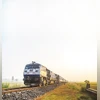
Indian Railways needs consistent government support, according to officials. Last October, Railways Minister Ashwini Vaishnaw told industry the transporter will significantly increase standards for equipment procurement. “Incrementalism will not work now. Please be prepared — those who do not improve will lose out,” he said.
A sector executive said that the government is willing to increase spending on high-quality equipment. Experts feel that with track electrification almost complete, railways’ focus will be on decongestion through capacity augmentation: New routes, gauge conversion, track doubling, and dedicated freight corridors.
“Infrastructure modernisation, including rolling stock upgrades and station redevelopment, alongside safety enhancements, will remain critical. Within capacity expansion, economic corridors (e.g. ports and mineral logistics) coupled with accelerated deployment of Kavach 4.0 and advanced signalling across the network, are expected to dominate both budgetary priorities and execution strategies,” said Suprio Banerjee, vice-president at ICRA.
Railways has avoided the commercial borrowing market for operational purposes for some years now, with the government focusing on debt management. Front loading of capital expenditure has resulted in the railways delivering better results on spending. As of December 2025, it had spent 80.54 per cent, around ₹2.03 trillion, of the total allotted capex of ₹2.52 trillion for FY26.
“This represents a 6.54 per cent increase in GBS [gross budgetary support] utilisation compared to the same period last year (December 2024). The expenditure has primarily focused on safety measures, capacity enhancement, infrastructure modernization, and passenger amenities,” the railway ministry said earlier this month.


 "Indian Railways needs consistent government support, according to officials")