


Tariff uncertainties pose growth risks, says RBI Governor Sanjay Malhotra
The governor said India's domestic growth is supported by stable policies, healthy corporate balance sheets and strong macroeconomic fundamentals that bode well for the economy.
 "RBI Governor Sanjay Malhotra")
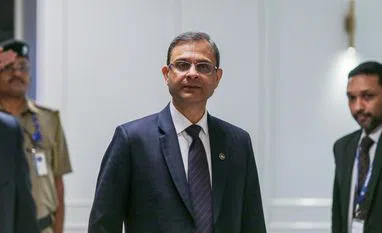
RBI Governor Sanjay Malhotra (Photo: Bloomberg)


Listen to This Article
By Anup Roy
India’s economic growth will see a short-term impact of the ongoing tariff tensions, the central bank governor said, though the South Asian nation will stay resilient amid geopolitical and trade uncertainties.
“I am hopeful that the impact of trade tariffs on our growth will be moderate,” Reserve Bank of India Governor Sanjay Malhotra said in an interview with the Times of India published Friday. Despite the global turmoil, India will remain the fastest-growing major economy “not only this year, but also in the decade ahead,” he said.
The governor said India’s domestic growth is supported by stable policies, healthy corporate balance sheets and strong macroeconomic fundamentals that bode well for the economy. However, to adapt to the changing landscape, India needs to diversify its trade relationships while integrating more into the global value chains, he said.
“It’s crucial to diversify and not be overly dependent on just one, two, or three countries. This is the time for diversification of the trade basket, country-wise and product-wise, focusing on our strengths,” the central bank chief said.
Also Read

 "Sanjay Malhotra")
 "RBI, Reserve Bank of India")
 "RBI")
 "Equity boom spurs shareholder activism, reshapes corporate boardrooms")
 "inflation, fmcg")
The RBI expects the economy to expand at 6.5% for the current fiscal year that started in April, much slower than 8% seen in the recent past. To boost growth, the central bank has lowered the benchmark repurchase rate by half-point in two consecutive meetings to 6% and signaled more easing.
“The pace of any future cuts will be determined by the Monetary Policy Committee,” he said. The monetary authority will announce its next decision on June 6.
On rupee volatility, the governor said that the central bank does not target a specific level but conducts “two-sided intervention” to contain abnormal volatility and ensure orderly movement in the currency market.
The governor also said that the RBI will “maintain adequate liquidity to facilitate the transmission of policy rate cuts across money, bond and credit markets.” Since Malhotra took over in December last year, the central bank has infused 9 trillion rupees in the banking system.
Reviewing Rules
Malhotra said the central bank is examining shareholding norms and licensing rules for banks as part of a broader review. While India permits 74% foreign direct investment in private banks, it restricts a single financial entity from holding more than 15% unless a regulatory exemption is granted.
The governor did not comment on the ongoing crisis at IndusInd Bank, but said “there are no systemic risks or concerns” for the financial system so far.
Malhotra also warned of additional measures to tackle the issue of mis-selling of financial products by banks.
More From This Section
 "PMI")
 "Oil, Oil demand")
 "Prime Minister Narendra Modi meets Sultan of Oman Haitham Bin Tarik")
 "remittance")
 "Oil refinery")
Don't miss the most important news and views of the day. Get them on our Telegram channel
First Published: May 23 2025 | 12:10 PM IST