


Why Shriram Bharatiya Kala Kendra's dance-drama, Ram, endures, 68 years on
The two-and-a-half-hour distillation of Tulsidas's epic has turned performance into pilgrimage, drawing audiences across generations
 "Ramlila")
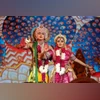
From Ram’s birth in Ayodhya to his coronation, the play unfolds seamlessly.
Listen to This Article
Ravan is late. He has just returned from Durga Puja, and the revelry has delayed him. In his makeshift dressing room, bare torsoed, he begins to transform. With deliberate strokes, he paints thick black eyebrows that stretch like bows across his forehead, half-covering it.
This isn’t the first time Ravan has been late. Years ago, it was Delhi’s traffic that kept another Ravan from the stage. That evening, the actor who now plays Ram had to step in as Ravan — and he did so with such conviction that the audience never knew the difference.
That is the resilience of Ram, the dance-drama produced annually by Shriram Bharatiya Kala Kendra since 1957. Returning every autumn with Shardiya Navratri, the production — now in its 68th year — is both ritual and performance. A two-and-a-half-hour spectacle distilled from Tulsidas’s Ramcharitmanas, it has continued uninterrupted through political upheavals, logistical snags, and even a pandemic. “Even during Covid, we did not stop,” says Kamaljeet Kaur, principal of Shri Ram. “We staged the show with strict safety protocols, cutting down seating from 700 to 200 and ensuring six feet between each person.”
(Shriram Bharatiya Kala Kendra’s dance-drama distilled from Tulsidas’s Ramcharitmanas) From Ram’s birth in Ayodhya to his coronation, the play unfolds seamlessly. Music flows into music, one dance form glides into another, and not a second is wasted. Bharatanatyam, Kathakali, Kathak, Mayurbhanj Chhau, Kalariyapattu, and North Indian folk traditions all find place here, set to original Hindustani classical compositions.
Also Read

 "Dussehra 2025 date")
 "Amit Shah")
 "Durga puja")
 "Kolkata rains, Kolkata, Durga puja pandal")
The production was conceived in 1957 by Sumitra Charat Ram, daughter-in-law of industrialist Lala Shri Ram, founder of the DCM empire, at the behest of Jawaharlal Nehru. With it, the lawns of the Kala Kendra became an annual pilgrimage ground. Sumitra Charat Ram’s daughter, Padma Shri Shobha Deepak Singh, who has directed the play for decades, continues that vision, blending fidelity to tradition with practical reinvention.
(Three-year-old Sanskriti Khanna who is portraying the child Ram this year) Speaking to this writer some years ago, Singh had recalled how the earliest productions struggled with heavy jewellery and fresh flower garlands. “The metal ornaments cost a fortune to polish, and tore the costumes,” she had said. Her solution was lightweight, Velcro-fastened jewellery and Chandni Chowk–crafted imitation flowers that replaced the costly real ones. Today, only the jaimala (wedding garland) is made of fresh flowers, and is replaced for every performance.
Such details reflect the play’s enduring philosophy: To honour tradition without being imprisoned by it. Costumes, inspired by miniature paintings and temple sculpture, are designed for both visual splendour and the quick costume changes required by a production that presents an epic in less than three hours. The choreography refuses pauses for exposition. The martial vigour of Mayurbhanj Chhau and Kalariyapattu merges with the expressiveness of Bharatanatyam, Kathakali, and Kathak, threaded with folk idioms. Each movement serves the narrative — Ram and Sita’s tenderness, Ravan’s defiance, Hanuman’s devotion, Ram’s ultimate triumph.
Over the decades, the dance-drama has travelled to 35 countries, drawing more than a million spectators. Its guest list reads like a roll call of Indian leadership — Nehru, Rajendra Prasad, Lal Bahadur Shastri, Indira Gandhi, Atal Bihari Vajpayee (who attended every year until he no longer could), and Pranab Mukherjee, for whom it was staged at Rashtrapati Bhavan.
(Former Prime Minister Atal Bihari Vajpayee, who attended the dance-drama every year until he no longer could. Seen also are Sumitra Charat Ram and Shobha Deepak Singh) Over the decades, the ballet has been variously called Ramayana, Shri Ram, or Ram, but its soul has remained unchanged.
For the audience, the play is inheritance. Parents, and even grandparents, who once came as children now bring their own families. For the performers, it is discipline, craft, and endurance.
Swapan Mazumdar, Ravan for the past 11 years, recalls how the production has evolved. In its earlier decades, the play was staged in Awadhi with live music from 150 musicians. By the 1980s, it shifted to recorded music and Hindi to reach a wider audience. Mazumdar has played Shatrughan, Laxman, and even group-dance roles before donning Ravan’s heavy Kathakali costume. “It looks grand, but is exhausting,” he says. “And Ravan is not cruelty personified, as he is often portrayed. He is a learned man, who instantly recognises that Ram is Vishnu’s avatar, for no ordinary human can kill Marich (the demon who assumes the form of the golden deer). When he says, ‘Marein Ram mokh main paaon,’ he accepts death at Ram’s hand as salvation.”
Mazumdar has missed the role only once — last year, after a truck accident left him with four broken bones. “I still have a plate in my collar bone. I will have it removed after this season ends,” he says.
Ram, meanwhile, is played by Raj Kumar Sharma, who has held the role for 33 years. His preparation is quick — 10 to 15 minutes of makeup, his lips rounded into a petal-like shape distinctive to his role. But the physicality of the performance demands a lifetime of discipline. Trained in Mayurbhanj Chhau, Sharma rises at 4 am, runs or trains at the gym, and eats only once a day — rice, vegetables, dry fruit, and juice. “Playing Ram has given me a calmness,” he says. Yet, he too has played other roles: the golden deer, Jatayu, even Ravan.
His innovations on stage have often delighted audiences. As Jatayu, he once suggested that instead of simply collapsing, he should be flung from the stage by Ravan. “The audience loved it. They would come backstage asking to meet Jatayu,” he recalls. As the golden deer, he added a skidding motion across the stage that became a crowd favourite. “Even in the vanar sena, we made the aisles part of the act — peeking at audience members’ snacks, snatching their chips mid-performance,” he laughs.
(India’s first Prime Minister, Jawaharlal Nehru, with Shriram Bharatiya Kala Kendra’s artistes. Seen also is Sumitra Charat Ram) Such improvisations were encouraged by Shobha Deepak Singh. At her behest, performers craft their own jewellery and accessories, Jatayu’s wings included. “It helps us connect with our characters more deeply,” says Sharma. The challenge is always time. Costume changes happen in under two minutes. “Sita,” says production manager Monika Jatwani, “wears two or three costumes layered on top of each other — from lehenga to sari to vanvas (exile) attire. These costume changes happen within minutes of the play’s start.”
Each year, something new is added. LED screens, for instance, have come to serve as backdrop, and this year, a child Ram appears on stage, played by three-year-old Sanskriti Khanna. The core, however, remains unchanged: Storytelling through dance and devotion.
Every evening, outside the Kendra, queues begin to form an hour before curtain. This evening, as dusk falls, Ram steps out of his green room and looks up at the sky. It is overcast, after a morning of lashing rain. He wonders if the heavens will hold. They do. For 68 years, the rain gods too have paused, so that the play may go on.
More From This Section
 "Akhanda 2 release date")
 "Final Destination Bloodlines OTT release")
 "Kantara: Chapter 1")
 "Dhanush's 'Idli Kadai'")
 "Balika Vadhu's Avika Gor marries Milind Chandwani")
Topics : Durga Puja Entertainment Shriram
Don't miss the most important news and views of the day. Get them on our Telegram channel
First Published: Oct 02 2025 | 5:00 PM IST