


Despite Kanishka bombing lessons, Canada gave space to extremists: Govt
The AI-182 Kanishka bombing was planned and executed in Canada. The attack claimed the lives of 329 innocent people (largely of India-origin), including 24 Indian nationals, the minister said
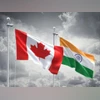 "India Canada")
The Commission identified "numerous mistakes" that were committed around the time of the bombing, including as regards the treatment of the victims' families, the minister said | File image
Listen to This Article
Despite lessons learnt from the terrorist act of the 1985 Kanishka bombing, space has been provided by the Canadian government for "violent extremists and secessionists" to continue their activities in the name of charter freedoms, the government said on Thursday.
Minister of State for External Affairs Kirti Vardhan Singh said this in a written response to a query in Rajya Sabha.
The government was asked the current status of India's engagement with the Canadian government and other partners, regarding the investigation and prosecution of those responsible for the 1985 Kanishka bombing and the details thereof.
The AI-182 Kanishka bombing was planned and executed in Canada. The dastardly attack claimed the lives of 329 innocent people (largely of India-origin), including 24 Indian nationals, the minister said.
In May 2006, the government of Canada appointed a Commission of Inquiry to examine the events surrounding the bombing; the subsequent investigation carried out by the relevant agencies, and to identify gaps in Canada's security and intelligence system, Singh said.
Also Read

 "India china, India, China")
 "Parliament Budget Session LIVE: Prime Minister Narendra Modi responded to Motion of Thanks in Rajya Sabha on Thursday. | File Photo")
 "Narendra Modi")
 "Parliament, New Parliament")
 "Parliament, New Parliament, Lok sabha, Rajya sabha")
On June 16, 2010, nearly 25 years after the bombing, the government of Canada received the final report of the Commission of Inquiry titled, 'Air India Flight 182: A Canadian Tragedy' which was a "damning indictment of actions" taken before and after the tragedy, he said.
The Commission identified "numerous mistakes" that were committed around the time of the bombing, including as regards the treatment of the victims' families, the minister said.
Some of the findings of the Commission, inter alia are that the Canadian government agencies were in "possession of significant pieces of information" that taken together would have led to the conclusion that Flight AI-182 was at high risk of being bombed by known pro-Khalistani terrorists in June 1985, Singh said.
"Canadian Government agencies failed to appreciate the nature and seriousness of the threat of pro-Khalistani extremism," he said, quoting the findings.
On June 23, 2010, at the 25th anniversary commemorative ceremony for the victims of the tragedy, the then prime minister of Canada "apologised on behalf of the government of Canada and all Canadians for the institutional failings" twenty-five years earlier and the treatment of the victims' families thereafter, he said.
"Despite the lessons learnt from this dastardly terrorist act, space has been provided by the Canadian government for violent extremists and secessionists to continue their activities in the name of Charter Freedoms," Singh said.
"Last year, we have seen that radical elements were for the very first time allowed by the Canadian government to hold protests at all places where our High Commission and Consulates were organising commemorative activities in honour of the victims of the attack.
"Such incidents continue to undermine the confidence in the Canadian legal and justice system and also impacts the India-Canada bilateral relations," he said in his response.
(Only the headline and picture of this report may have been reworked by the Business Standard staff; the rest of the content is auto-generated from a syndicated feed.)
More From This Section
 "Protest, Bangladesh Protest")
 "S Jaishankar, Jaishankar")
 "Rajnath Singh, Defence Minister")
 "EAM S Jaishankar")
 "Ukraine flag")
Don't miss the most important news and views of the day. Get them on our Telegram channel
First Published: Feb 07 2025 | 7:12 AM IST