


Multipolar world benefits India, strengthens global ties: EAM Jaishankar
India has a stable relationship with the US, unlike some other countries, Jaishankar stated
 "S Jaishankar, Jaishankar")
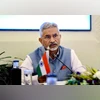
External Affairs Minister S Jaishankar (Photo: PTI)
Listen to This Article
External Affairs Minister S Jaishankar said a world with multiple centers of power aligns with India’s interests. Speaking at Chatham House in London, he emphasised how evolving global dynamics, particularly under US President Donald Trump’s foreign policy, are reshaping alliances in a manner favourable to India.
Jaishankar underscored the importance of strategic autonomy in India’s foreign policy, noting that a multipolar world order allows the country to navigate global challenges while fostering stronger partnerships with key players.
India & US: A strong partnership
India has a stable relationship with the US, unlike some other countries, Jaishankar stated.
He pointed to the Quadrilateral Security Dialogue (Quad), which includes the US, India, Australia, and Japan, as an example of their cooperation. He emphasised that all Quad members contribute equally and play a responsible role in regional stability.
Also Read

 "S Jaishanar, External affairs minister, Ireland President Michael Higgins")
 "Official Spokesperson of the Ministry of External Affairs Randhir Jaiswal")
 "S Jaishankar, Jaishankar")
 "S Jaishankar, Jaishankar, Bronwen Maddox")
No plan to replace the US dollar
Addressing concerns about the US dollar’s dominance, Jaishankar clarified that India has no agenda to replace it. “Just because the world is becoming multipolar does not mean currencies have to follow the same trend,” he said. He dismissed claims that BRICS nations are working together to challenge the dollar, stating that India values economic stability.
Technology and trade relations
Jaishankar welcomed the Trump administration’s focus on technology, saying it offers India great opportunities. He also discussed India’s trade ties with the US, revealing that Commerce Minister Piyush Goyal is currently in Washington to negotiate a trade deal.
In the UK, Jaishankar expressed optimism about the India-UK Free Trade Agreement (FTA). While acknowledging the complexity of negotiations, he said discussions with UK leaders had been positive.
India’s role in global conflicts
On global conflicts, Jaishankar reaffirmed India’s neutral stance. He said India remains in contact with both Russia and Ukraine and is always open to playing a constructive role. On China, he noted progress in relations since 2024, including the reopening of the Mount Kailash pilgrimage route. He emphasised India’s desire for a respectful and mutually beneficial relationship with China.
India’s human rights record
Jaishankar defended India’s human rights record, calling it strong despite criticism from Western media. He dismissed concerns about minority rights, saying, “I am a Tamil, and I feel perfectly comfortable.” He also criticised political forces that exploit identity issues for their benefit.
Addressing the Kashmir issue
On Kashmir, Jaishankar reiterated that the abrogation of Article 370 was just the first step. He said the focus is now on economic growth and elections in the region. He also stated that a final resolution could only happen when Pakistan vacates illegally occupied parts of Kashmir.
Jaishankar’s remarks reflect India’s confidence in a changing world, its commitment to strong global partnerships, and its focus on economic and political stability.
[With inputs from agencies]
More From This Section
 "India china")
 "File Photo: The US court has approved the extradition of a Canadian businessman of Pakistani descent Tahawwur Rana to India where he is sought for his involvement in the 2008 Mumbai terror attacks.")
 "West Bank")
 "India Israel, India-Israel")
 "China, China flag")
Don't miss the most important news and views of the day. Get them on our Telegram channel
First Published: Mar 07 2025 | 3:53 PM IST