


India successfully conducts tests of Prithvi-II and Agni-I missiles
India successfully test fires Prithvi-II and Agni-I ballistic missiles from ITR off Odisha coast
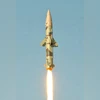 "The Agni-I missile was launched from Abdul Kalam Island. | X@defencealerts")
The Agni-I missile was launched from Abdul Kalam Island. | X@defencealerts
Listen to This Article
India on Thursday successfully carried out test-firings of the nuclear-capable short-range ballistic missiles Prithvi-II and Agni-I. The launches were conducted from the Integrated Test Range located off the coast of Odisha, according to a report by the Press Trust of India.
According to the Ministry of Defence, the test was carried out by the Strategic Forces Command and confirmed that both missiles met all operational and technical standards.
"Short-range ballistic missiles -- Prithvi-II and Agni-I -- were successfully test-fired from the Integrated Test Range in Chandipur, Odisha on July 17," the ministry said in a brief statement.
It added that the launches "validated all operational and technical parameters". "These tests were conducted under the aegis of the Strategic Forces Command," the ministry said.
The Prithvi-II missile has a range of about 350 km and can carry a warhead of up to 500 kg. It is designed to carry both nuclear and conventional payloads. The Agni-I missile, on the other hand, has a longer range of 700–900 km and is capable of delivering a 1,000 kg payload.
Also Read

 "Siddaramaiah")
 "HDFC Life Insurance")
 "Zee Entertainment Enterprises")
 "Jio Financial Services")
 "Puneet Chhatwal, managing director and chief executive officer at IHCL")
Both missiles form a key part of India’s nuclear deterrence strategy.
Akash Prime missile tested in Ladakh
A day earlier, on Wednesday (July 16), India successfully tested the Akash Prime missile in the high-altitude region of Ladakh. The indigenously developed missile is specifically designed to function at altitudes above 4,500 metres.
"India on July 16 achieved a significant milestone by successfully destroying two aerial high speed unmanned targets at high-altitude in Ladakh by Akash Prime, the upgraded variant of Akash weapon system for the Indian Army," the ministry said in a separate statement.
Akash Prime is an improved version of the original Akash air defence system and has been customised for use by the Indian Army. The latest version includes upgrades such as an indigenously developed radio frequency seeker.
The ministry added, "Based on the operational feedbacks from users, various upgrades are made to improve the operational effectiveness, demonstrating the advantage of the ecosystem created for the indigenous weapon system."
The test in Ladakh is considered significant due to its proximity to the Line of Actual Control (LAC), the de facto border with China.
Rajnath Singh hails achievement
Defence Minister Rajnath Singh congratulated the Indian Army, the Defence Research and Development Organisation (DRDO), and the Indian defence industry for this success. The ministry described the test-firing as a “remarkable achievement.”
The Akash Prime test follows the "exceptional performance" of India’s homegrown air defence systems during Operation Sindoor, highlighting ongoing efforts to strengthen indigenous defence capabilities.
More From This Section
 "MEA spokesperson Randhir Jaiswal")
 "terrorism ak47 guns violence")
 "Ministry of External Affairs")
 "US visa social media directive, US visa rules Indian students, Indian students US visa screening, F1 visa decline India, Indian non-immigrant visa trends, US visa approvals India FY25, Indian students US study 2025, F1 J1 M1 visa types India, US visa")
Topics : Rajnath Singh Prithvi Missile Agni II Ladakh
Don't miss the most important news and views of the day. Get them on our Telegram channel
First Published: Jul 17 2025 | 10:00 PM IST