


Op Sindoor: Satellite images show strikes on terror hubs in Pakistan, PoK
Indian armed forces release satellite images of Operation Sindoor strikes on terror bases and military assets across Pakistan and Pakistan-Occupied Kashmir after Pahalgam attack
 "Satellite images of Operation Sindoor")
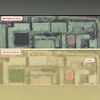
IAF releases satellite images of Operation Sindoor
Listen to This Article
The Indian armed forces have released high-resolution satellite images providing visual proof of strikes carried out under Operation Sindoor on terror infrastructure across Pakistan and Pakistan-occupied Kashmir (PoK). The images offer before-and-after views of key targets, notably in Muridke and Bahawalpur, and also highlight the damage inflicted on Pakistan’s air defence radars and airfields.
Operation Sindoor, which included a series of precision missile strikes, was launched in the early hours of May 7 following the April 22 terror attack in Pahalgam, Jammu and Kashmir, which claimed 26 lives.
Where was Operation Sindoor carried out?
The retaliatory operation targeted infrastructure linked to terrorist groups such as Lashkar-e-Taiba (LeT), Jaish-e-Mohammed (JeM), and Hizbul Mujahideen.
According to the Indian military, the overnight offensive last week involved 24 missile strikes over 25 minutes, aimed at nine locations. This includes four within Pakistan (Muridke, Bahawalpur, Sarjal, and Mehmoona Joya) and five in PoK (Muzaffarabad, Syedna Bilal, Gulpur, Kotli, and Barnala, including areas near Bhimber and Abbas).
Muridke, a bustling commercial hub, is widely known as the epicentre of LeT’s operations. Spread over an estimated 200 acres, the area houses the group's headquarters, complete with training camps and operational facilities. The LeT, led by Hafiz Saeed, has been blamed for orchestrating the Pahalgam attack. Similarly, Bahawalpur in Punjab province, another target of the Indian strikes, serves as the base of JeM, the group behind the 2008 Mumbai attacks, led by Masood Azhar.
Also Read

 "Security, Pulwama Security, Army, soldier")
 "Operation Sindoor")
 "Dilip Ghosh,Dilip")
 "flight plane")
 "Delhi airport, Airport")
Defence Minister Rajnath Singh stated that through this operation, India neutralised the leadership and infrastructure rather than lower-rank operatives.
India-Pakistan relations
Following the initial strikes on terror sites, tensions escalated when Pakistan reportedly responded by deploying drones to target Indian civilian areas. In a counteroffensive move, India struck deeper into Pakistani territory, hitting high-value military assets such as radar systems, command centres, and ammunition depots in Rafiqui, Chaklala, Rahim Yar Khan, Sukkur, and Sialkot.
Air Marshal A K Bharti, in a press briefing on Sunday evening, revealed that within a three-hour window, Indian forces targeted 11 military bases, including Nur Khan, Rafiqui, Murid, Sukkur, Sialkot, Pasrur, Chunian, Sargodha, Skardu, Bholari, and Jacobabad. The operation marked the first known instance of a country attacking air force installations of a nuclear-armed adversary, he said.
More From This Section
 "Operation Sindoor")
 "missile attack, India Pakistan conflict, operation sindoor")
 "Srinagar, India-Pakistan war, conflict, army, security personnerl, vigil, ceasefire breach")
 "PM Narendra Modi with Defence Minister Rajnath Singh, EAM S Jaishankar, Chief of Defence Staff General Anil Chauhan, Chief of Army Staff General Upendra Dwivedi, Foreign Secretary Vikram Misri, and others during a meeting in New Delhi on Sunday")
Topics : Operation Sindoor Pahalgam attack BS Web Reports IAF IAF air strike India-Pakistan conflict india-pak ties India Pakistan relations
Don't miss the most important news and views of the day. Get them on our Telegram channel
First Published: May 12 2025 | 11:05 AM IST