


Up to four banks may tap capital buffers in adverse scenarios: RBI
RBI stress tests suggest some banks may need to draw on capital conservation buffers under adverse macro conditions, though minimum capital norms are likely to remain intact
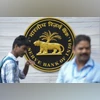 "RBI, Reserve Bank of India")
File Photo: PTI.
Listen to This Article
The Reserve Bank of India (RBI), in its Financial Stability Report (FSR), cautioned that stress tests indicate two scheduled commercial banks (SCBs) may have to dip into their capital conservation buffers (CCBs), unless stakeholders infuse capital, under a scenario involving a gradual slowdown in domestic GDP growth and a moderate rise in inflation, with limited policy easing space available to the central bank.
Additionally, under a more severe stress scenario, marked by a sharp slowdown in GDP growth, inflation breaching the tolerable band and a tightening of policy rates, four banks could be required to draw down their CCBs, unless stakeholders infuse capital.
CCB is an additional capital cushion that banks are required to hold over and above minimum regulatory capital requirements to absorb losses during periods of financial stress without disrupting credit flow to the economy. CCB consists of Common Equity Tier 1 (CET1) capital and, in India, is set at 2.5 per cent of a bank’s risk-weighted assets.
Having said that, RBI’s stress test revealed that none of the banks would fall short of the minimum Capital to Risk-Weighted Assets Ratio (CRAR) requirement of 9 per cent even under the adverse scenarios.
According to RBI, the macro stress test results reaffirmed the resilience of SCBs to the assumed macroeconomic shocks.
Also Read

 "Reserve Bank of India, RBI")
 "Reserve Bank of India, RBI")
 "The ATM interchange conundrum")
 "financial sector, banking")
 "Indian Economy, GDP Growth")
“The results revealed that the aggregate CRAR of 46 major SCBs may drop from 17.1 per cent in September 2025 to 16.8 per cent by March 2027 under the baseline scenario. It may fall to 14.5 per cent and 14.1 per cent under the hypothetical adverse scenarios 1 and 2, respectively,” the central bank said.
Macro stress test assesses the resilience of banks to withstand adverse macroeconomic shocks. The test attempts to project the capital ratios of banks over a one-and-half year horizon under three scenarios -- a baseline and two adverse macro scenarios.
While the baseline scenario was derived from the latest forecasted paths of the macroeconomic variables, the two adverse scenarios are hypothetically stringent stress scenario.
Separately, the RBI flagged that private sector banks are witnessing higher fresh slippages in unsecured retail loans, while write-offs in this segment continue to remain elevated.
According to the central bank, slippages in unsecured retail loans accounted for 53.1 per cent of total retail loan slippages across the banking system. That said, overall asset quality remains stable, with the gross non-performing asset (GNPA) ratio at 1.8 per cent as of September 2025, compared with a GNPA ratio of 1.1 per cent for the overall retail loan portfolio.
Additionally, the RBI highlighted that consumer loans, which had declined following countercyclical regulatory measures to curb rapid growth in the segment, are now showing signs of stabilisation. Enquiry volumes picked up in September 2025, reflecting a rebound in demand after GST rate cuts, even as the slowdown in the growth of credit-active consumers appears to have bottomed out.
“Among different product types, gold loans saw sharp growth across banks and NBFCs. Similarly, unsecured business loans also grew quickly led by banks,” RBI said, adding that in both banks and NBFCs, the outstanding loans held by higher quality borrowers dominated the unsecured business loans category.
Meanwhile, the RBI underscored that banks’ funding composition over the past year has shifted, with equity capital emerging
as a stronger source of funds even as household deposits, the primary funding source, declined. This occurred alongside an increase in net loans and advances, investments in state government securities and other assets. As a result, the credit-to-deposit (CD) ratio rose to 78.9 per cent in September 2025 from 78.0 per cent a year earlier.
“Importantly, the increase in the CD ratio is driven by the substitution of funding from deposits with an increase in equity capital,” RBI said.
Further, RBI has flagged that credit to large corporates remains weak as a steeper yield curve and wider spreads on state government bonds have made investments in government securities more attractive than loans on a risk-adjusted basis, particularly for private banks, diverting funds away from corporate lending except to MSMEs.
Additionally, the RBI has cautioned that the current steepening of the yield curve and relatively higher exchange rate volatility, if sustained, could impact treasury income of banks. This assumes significance as income generated out of treasury operations is emerging as a key source of other operating income for banks, especially in the last two quarters.
According to the central bank’s analysis, the sectors that were potentially exposed to higher US tariffs showed that the share of banks’ lending to these sectors remained steady at 12.6 per cent as at end-September 2025 -- with advances to the textiles sector forming the largest share.
“In terms of asset quality, while the SMA ratio in these sectors remained broadly stable, the GNPA ratio remained higher. Overall, these sectors are showing resilience despite the unfavourable external environment,” RBI said in the report.
The RBI also noted that, similar to the global scenario-- where growth in non-bank financial intermediaries (NBFIs) and their increasing linkages with the banking system is a major concern-- Indian banks’ exposures to NBFIs are also rising.
“Public sector banks predominantly hold funded exposures, whereas private sector banks have nearly half of their total exposure in non-funded facilities, which NBFIs may draw upon during periods of liquidity stress,” it said.
More From This Section
 "Stablecoins")
 "Reserve Bank of India, RBI")
 "FDI")
 "Rupee")
 "IllustratIon: Binay Sinha")
Don't miss the most important news and views of the day. Get them on our Telegram channel
First Published: Dec 31 2025 | 7:53 PM IST