


Overleverage in retail loans is a concern, warns JFSL chairman Kamath
K V Kamath warns of overleverage in retail credit as fintechs lend at low scores; RBI data shows rising defaults in unsecured personal loans
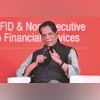 "K V KAMATH, veteran banker and chairman of Jio Financial Services and National Bank for Financing Infrastructure and Development (NBFID)")
K V Kamath, Chairman, Jio Financial Services Ltd (JFSL)
Listen to This Article
Flagging risks of overleverage in retail credit, Jio Financial Services Ltd (JFSL) Chairman K V Kamath on Friday said banks and financial institutions need to exercise caution in lending as the health quality of loan books could quickly suffer.
Some financial technology (fintech) companies are extending loans to those with a credit score of 550, and there are instances of customers having five outstanding loans, indicating the extent of overloading. Somewhere, this debt is sinking, Kamath said during a fireside chat at the Financial Markets Conclave organised by The Bengal Chamber of Commerce & Industry.
Referring to his conversations with a chief executive officer (CEO) on credit score thresholds, Kamath said: "I asked the CEO, at what score are fintechs lending? I was expecting something like 775. He (the CEO) said 550. The CEO saw the shock on my face, and also informed me that some customers had five outstanding loans.”
"So, basically, you can understand the extent of overloading that is there. I can't say that that has been brought down. As a banker, I would always be cautious when there is an issue that is beyond what you expect to be present in the marketplace,” Kamath said and expressed hope for a smooth landing. If not, there will be bad days ahead, he added.
According to credit information bureau CRIF High Mark data, in personal loans, 360-plus day dues continued to rise, especially when compared to June 2023, indicating persistent long-term stress in collections, and a growing share of non-performing accounts. The delinquency rate rose from 3 per cent in June 2023 to 4.5 per cent in June 2024. and further to 4.6 per cent in June 2025.
Also Read

 "a")
 "Credit")
 "RBI, Reserve Bank of India")
 "Niti Aayog")
 "Retail credit")
Way back in late 2023, the Reserve Bank of India (RBI) had flagged concern on sharp growth in unsecured retail credit, and higher default risk in that segment. In November 2023, it hiked the risk weights on certain personal and consumption loans. Later they were reversed following moderation in credit growth, and steps taken by lenders to manage risks from such portfolios.
In June 2025, the RBI’s Financial Stability Report (FSR) said though unsecured retail lending moderated, it formed 25 per cent of retail loans and 8.3 per cent of gross advances, and was more vulnerable. Its asset quality relatively weakened compared to the overall retail portfolio — gross non-performing asset (GNPA) ratio at 1.8 per cent vis-à-vis 1.2 per cent in March 2025 — especially in respect of private sector banks.
Slippages in unsecured retail loans remain elevated for private sector banks. Fresh slippages in unsecured retail loans continue to dominate the overall slippage in the retail loan segment, with private sector lenders’ contribution significantly higher among bank groups, the FSR said.
More From This Section
 "MSME credit target FY26, MSME loans public sector banks, PSB MSME lending growth, Finance Ministry MSME focus, India MSME sector credit, SBI MSME loan target 2025, PNB MSME lending growth, MSME credit outstanding FY25, MSME loan YTD growth 2025, GNPA")
 "Ujjivan Small Finance Bank news, Ujjivan SFB stock price today, Ujjivan SFB share target 2025, Ujjivan bank universal license update, Small finance banks in India 2025, Best small finance bank stocks India, Universal banking license India, RBI univer")
 "BANKS, NBFC")
 "Adani Group's acquisition of a controlling stake in ITD Cementation India through a Rs 3,204 crore deal marks the conglomerate's entry into the engineering and construction (EPC) sector. With this purchase, the group aims to leverage its capital expe")
 "Bhupender Yadav, Bhupender")
Don't miss the most important news and views of the day. Get them on our Telegram channel
First Published: Sep 12 2025 | 7:24 PM IST