


What links UK tyre exports to India's toxic air and black market plants?
The majority of UK's exported waste tyres are diverted to India where they are processed in makeshift furnaces, causing serious environmental damage and health problems
 "tyres, waste, pollution")
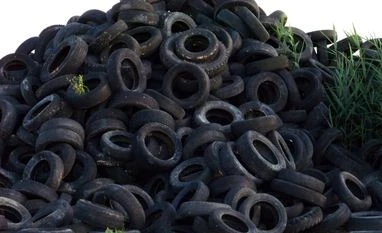
Instead of being processed in legal recycling facilities, a large volume of waste tyres is diverted to unregulated pyrolysis plants, finds BBC. (Photo: Wikimedia Commons)
Listen to This Article
Millions of tyres exported from the United Kingdom to India for recycling are instead being incinerated in makeshift furnaces, resulting in serious health risks and significant environmental damage, according to a BBC investigation.
A mounting waste crisis
Industry sources told BBC File on 4 Investigates that the UK produces around 50 million waste tyres every year, with nearly half sent abroad—mostly to India. This is reportedly an open secret within the recycling industry.
The investigation, conducted in collaboration with journalism group SourceMaterial, revealed that instead of being processed in legal recycling facilities, a large volume of these tyres is diverted to unregulated pyrolysis plants. These plants are worsening India’s already critical air quality and posing serious health hazards.
Toxic pyrolysis in illegal facilities
Also Read

 "us dollar")
 "Zulfikar bhutto, Indira Gandhi, Simla agreement")
 "How India can leverage the Indus water treaty")
 "CCS meeting, Pahalgam attack, Indus")
 "US President Donald Trump, US Fed Chain Jerome Powell")
In these makeshift industrial units, tyres are subjected to pyrolysis—a process that involves heating them to around 500 degrees Celsius in an oxygen-free environment. The goal is to extract steel, small quantities of oil, and carbon black, a material used in various industries. However, due to the lack of regulation and pollution control, the process emits toxic gases and hazardous chemicals.
The report highlights that emissions from these facilities contaminate water sources, degrade surrounding vegetation, and contribute to life-threatening respiratory conditions. Residents living nearby complain of chronic coughs, eye irritation, and difficulty breathing due to prolonged exposure to soot and chemical fumes.
“We want these companies moved from our village; otherwise, we will not be able to breathe freely,” a resident of Wada, on the outskirts of Mumbai, told the BBC.
The black market in India’s tyre recycling
While official documents claim that UK tyre exports are sent to authorised recycling centres, industry insiders confirm that most of them end up in India’s black market.
According to the Tyre Recovery Association (TRA), around 70 per cent of imported tyres are diverted to unlicensed facilities. Elliot Mason, a leading UK tyre recycler, told the BBC that it is an “open secret” in the industry that these tyres are not being recycled properly.
To track the supply chain, the BBC placed hidden GPS devices in tyre shipments. The trackers showed that tyres reached illegal pyrolysis sites in remote areas of India, where they were burned under unsafe conditions, releasing harmful pollutants into the air.
Fatal consequences and weak enforcement
In January, an explosion at one such pyrolysis plant in Wada, near Mumbai, killed four people, including two children. The plant had reportedly been processing tyres sourced from Europe and lacked even basic safety measures.
Following the incident, local authorities shut down seven plants in the region. However, environmental activists estimate that hundreds of illegal pyrolysis facilities continue to operate across India, worsening the air pollution crisis.
Though the Indian government has banned the use of imported tyres in pyrolysis, enforcement has been weak. According to an environmental lawyer interviewed by the BBC, roughly half of the country’s 2,000 pyrolysis plants are unlicensed, making meaningful pollution control nearly impossible.
More From This Section
 "drugs, pharma")
 "Chewing gum")
 "Aiims New Delhi, All India Institute of Medical Science")
 "ICMR, drones, health, Aiims")
 "World Tuberculosis Day 2025")
Don't miss the most important news and views of the day. Get them on our Telegram channel
First Published: Mar 27 2025 | 2:10 PM IST