


Ayodhya verdict was not based on faith, but on evidence: Ex-CJI Chandrachud
Shedding light on the judgment made in the Ram Janmabhoomi-Babri Masjid case, Chandrachud said that most people who expressed their opinions on social media did not even read the judgment
 "DY Chandrachud, Chandrachud")
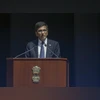
Ex-CJI Chandrachud on Ayodhya verdict: Chandrachud clarifies on personal faith amid Ayodhya verdict row | (Photo: PTI)
Listen to This Article
Former Chief Justice of India Dhananjaya Yeshwant Chandrachud said that the Ayodhya case was not decided based on faith, but was based on legal principles and evidence.
DY Chandrachud made these remarks at the India Today Conclave on Thursday. He further clarified that his remarks, "erection of the Babri Masjid was a fundamental act of desecration", given to a media portal, were taken out of context, leading to a misinterpretation of his views on the Ram Temple-Babri mosque dispute.
He further said, "What is happening on social media is that people lift one part of the answer and combine it with another part, completely removing the context."
Shedding light on the judgment made by the five-judge bench on the Ram Janmabhoomi-Babri Masjid case, Chandrachud said that most people who expressed their opinions on social media platforms did not even read the verdict judgment. Elaborating further, he said, "The judgment was 1,045 pages long because the case record was over 30,000 pages. Most people who criticise it have not read the judgment. It is easy to post opinions on social media without reading the full document."
Chandrachud clarifies on personal faith amid Ayodhya verdict row
Responding to the question of whether acknowledging prayer before a significant ruling conflicted with the constitutional principle of judicial neutrality, the former chief justice said, "Every day, judges enter a zone of conflict. I pray or meditate each morning to bring peace and balance to my work.” He added, "My belief allows space for others to believe differently. There is nothing wrong in quiet reflection or prayer that helps a judge do justice with an even hand."

 "Benjamin Netanyahu, Benjamin, Netanyahu, Israel PM")
 "stocks brokers, markets, sensex, nifty, stock market")
 "Kitchen")
 "Droupadi Murmu, Murmu, President")
 "Adani Green Energy solar project, 7 GW solar power project, Andhra Pradesh solar energy, Azure Power PPA transfer, SECI solar projects, CERC solar ruling, solar power regulatory approval, Adani Green Energy SECI deal, 2.3 GW PPA Adani, solar energy I")
Ayodhya dispute
On November 9, 2019, a five-judge bench of the Supreme Court gave a unanimous verdict in the Ram Temple-Babri Masjid case. Bringing the decades-old dispute to an end, the court ordered Hindus to construct a Ram temple on the disputed land and sanctioned Muslims five acres to build a mosque in the temple town.
The bench was headed by former Chief Justice Ranjan Gogoi and included Justices DY Chandrachud, S A Bobde, Ashok Bhushan, and S Abdul Nazeer.
The apex court ruled that in three months, the Central government will form the scheme for setting up a board of trust that will frame the rules and powers for constructing the temple.
More From This Section
 "gavel law cases")
 "Women, Indian Women")
 "AI, ARTIFICIAL INTELLIGENCE")
 "BJP Flag, BJP")
Don't miss the most important news and views of the day. Get them on our Telegram channel
First Published: Sep 26 2025 | 1:44 PM IST