


Delhi govt to replace Ladli Scheme with Lakhpati Bitiya Yojana from April
The government said the new scheme will provide financial assistance of up to ₹56,000 per beneficiary through phased deposits linked to education and age milestones, with Aadhaar-linked payouts
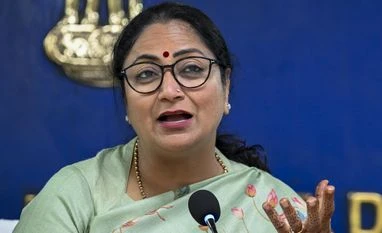 "Rekha Gupta, Delhi CM")
Delhi Chief Minister Rekha Gupta. (File Photo: PTI)
Listen to This Article
The Delhi government on Tuesday said it will launch the Lakhpati Bitiya Yojana from April 1, replacing the Ladli Scheme introduced in 2008. Chief Minister Rekha Gupta said the new programme is an upgraded version intended to strengthen financial support for girls from economically weaker families and extend benefits to higher education.
“We will launch the upgraded scheme on April 1 and shut down the old Ladli scheme,” she announced at a press conference.
The government said the new scheme will provide financial assistance of up to ₹56,000 per beneficiary in phased deposits linked to education and age milestones. The accumulated amount will grow with interest and be released to the beneficiary at maturity through an Aadhaar-linked bank account.
What are the payouts and eligibility under the Lakhpati Bitiya Yojana?
Under the new scheme, ₹11,000 will be deposited at birth, followed by ₹5,000 at admission to Class I and further deposits at later educational stages, including Classes 6, 8, 10, and 12. An additional ₹20,000 will be deposited in phases if the girl goes for graduation or diploma studies.
The total government contribution may reach ₹56,000 and is expected to grow to more than ₹1 lakh with interest. The maturity amount can be claimed after the beneficiary turns 18 and passes Class XII, or after completing graduation or a diploma and turning 21. The state government has estimated the cost of implementing the upgraded scheme at around ₹160 crore.
Also Read

 "Happiest Minds Technologies, Happiest Mind")
 "coal, fossil fuel")
 "ai, artificial intelligence")
 "Britannia Industries")
 "Protest, Genz, Corruption")
The scheme will apply to girls born in Delhi whose families have lived in the city for at least three years and have an annual income not exceeding ₹1.20 lakh. Benefits will be limited to two surviving girl children per family.
How the new scheme expands benefits to higher education
The new programme will extend coverage beyond school education. Girls pursuing graduation or professional diploma courses in recognised institutions across India will be eligible. Conditions for girls living in government-supported child care institutions have also been relaxed to include vulnerable beneficiaries.
The government said a digital portal will be created to manage registration and tracking. It added that unclaimed funds under the earlier Ladli scheme have been identified and steps are being taken to distribute them.
“When we assumed office, we found that a large number of maturity accounts under the Ladli scheme remained unclaimed,” the Chief Minister said. She added that funds lying unused in earlier accounts would be released to identified beneficiaries.
What was the Ladli Scheme and why is it being replaced?
The Ladli Scheme, launched in 2008 by the Women and Child Development Department under the Sheila Dikshit-led Congress government, provided financial support for girls from low-income families through deposits linked to school enrolment and progression. Payments were made at birth and at stages such as Class 1, 6, 9, and 12. The accumulated amount was released when the beneficiary turned 18 and met eligibility conditions.
The scheme aimed to improve enrolment and retention of girls in school and provide financial security at adulthood. However, the current BJP government claimed several maturity accounts remained unclaimed, prompting a redesign of the programme.
Lakhpati Bitiya Yojana vs Ladli Scheme: Key differences
The Lakhpati Bitiya Yojana expands the scope of the earlier scheme in several ways. It increases the total deposit amount, extends benefits to graduation or diploma education and introduces Aadhaar-linked payments and digital tracking. The income ceiling has also been revised and conditions for vulnerable groups have been relaxed.
Both schemes provide phased deposits linked to educational milestones and restrict benefits to two girls per family. However, the new scheme introduces higher deposits, longer coverage, and a revised maturity structure tied to higher education completion.
What is the Delhi government’s objective behind the new scheme?
The Chief Minister said the new programme is intended to ensure that girls do not drop out of education due to financial constraints.
“This is an investment in the future of our girls and the future of the country. No girl will quit education for lack of funds,” she said.
More From This Section
 "Lok Sabha, LS")
 "Delhi High Court")
 "Classroom, Class, Students, Student, Class 10 board, Class 10 board, Board Exam")
 "Sunjay Kapur")
 "Pappu Yadav, Pappu")
Don't miss the most important news and views of the day. Get them on our Telegram channel
First Published: Feb 10 2026 | 10:35 PM IST