


Rare Golconda blue diamond with royal ties heads to auction in Geneva
Once part of India's royal treasure, the 23.24-carat Golconda Blue diamond will make its auction debut at Christie's Geneva, estimated at up to $50 million
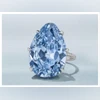 "The Golconda Blue")
The Golconda Blue (Photo: Christie)


Listen to This Article
A prized relic of India’s regal past, The Golconda Blue — a blue diamond historically owned by the Maharajas of Indore and Baroda — is set to make its auction debut at Christie's "Magnificent Jewels" sale in Geneva on May 14.
Weighing 23.24 carats, the vivid blue diamond has been mounted in a contemporary ring designed by renowned Parisian jeweller JAR. Its estimated auction value ranges between $35 million and $50 million (approximately ?430 crore).
"Exceptional noble gems of this caliber come to market once in a lifetime," said Rahul Kadakia, Christie's International Head of Jewelry, as quoted by news agency PTI.
“Over the course of its 259-year history, Christie's has had the honour of offering some of the world's most important Golconda diamonds, including the Archduke Joseph, the Princie, and the Wittelsbach. With its Royal heritage, extraordinary color, and exceptional size, 'The Golconda Blue' is truly one of the rarest blue diamonds in the world," Kadakia added.
Legacy rooted in Indian royalty
One of the most significant and rare blue diamonds ever known, the gem’s Indian connection enhances its appeal, particularly for Indian collectors and enthusiasts. Its origins trace back to the fabled Golconda mines in present-day Telangana — historically known for producing some of the most renowned diamonds in the world, including Kohinoor.
Also Read

 "Adit Bhansali and Aayush Bhansa, Founders, Firefly Diamonds")
 "Although the exact pricing depends on the four 'C's (carat, cut, colour, and clarity) and market conditions, lab‐grown diamonds tend to be roughly 30–50 per cent cheaper than a natural diamond of similar quality")
 "Vedanta")
 "Chinese supplier, luxury goods, collage")
 "Goldman Sachs Group Inc")
According to Christie's, the diamond was once in the possession of Maharaja Yeshwant Rao Holkar II of Indore, a monarch known for his sensibilities and global outlook during the 1920s and 1930s.
From Chaumet to Mauboussin: A jewel’s evolution
In 1923, the Maharaja’s father had the gem set into a bracelet crafted by the prestigious French jeweller Chaumet. This followed his earlier purchase of the famous “Indore Pears,” two large Golconda diamonds, also from Chaumet.
A decade later, the Maharaja entrusted Mauboussin as his official jeweller. The firm redesigned parts of the royal collection, placing The Golconda Blue in a remarkable necklace alongside the Indore Pear diamonds.
The necklace later appeared in a painting of the Maharani of Indore by French artist Bernard Boutet de Monvel, epitomising Indo-European sophistication.
By 1947, the diamond was acquired by legendary New York jeweler Harry Winston. He set it in a brooch, pairing it with a white diamond of similar size. This brooch eventually became part of the collection of the Maharaja of Baroda, further cementing the stone’s deep connection to Indian royalty before it transitioned into private ownership.
(With agency inputs)
More From This Section
 "Supreme Court")
 "PM Modi in Surat Gujarat rally")
 "Mehul Choksi")
 "Pinarayi Vijayan, Pinarayi, Vijayan, Kerala CM")
 "Foxconn")
Topics : diamond auction BS Web Reports
Don't miss the most important news and views of the day. Get them on our Telegram channel
First Published: Apr 14 2025 | 5:30 PM IST