


India's voice to the world: Veteran journalist Mark Tully dies at 90
Veteran BBC World Service journalist Mark Tully, long regarded as the voice of India to the world, has died at 90, leaving behind a legacy of credible and landmark reporting
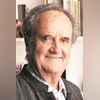 "Mark Tully")
Tully had joined the BBC in the 1960s, and was posted in India in 1965 – initially as a manager.
Listen to This Article
Mark Tully represented the one quality that all journalists aspire to: Credibility. He died at 90, still a British citizen but in his soul and spirit, an Indian.
For many decades, he was the voice of India on the BBC World Service: Not just during the Emergency, when he broadcast stories about censorship, midnight arrests, extra-judicial killings, and was expelled, only to return 18 months later, but also during the demolition of Babri Masjid, when screaming crowds in Ayodhya chased him, chanting “BBC murdabad” and “Mark Tully murdabad”. His reportage of the Indian Peace Keeping Force, the Liberation Tigers of Tamil Eelam (LTTE), and other groups in north and east Sri Lanka, and later, Rajiv Gandhi’s assassination, is landmark journalism.
Indians here, and around the globe, turned to him to learn the facts about the storming of the Golden Temple, the back story of the creation of Jarnail Singh Bhindranwale, and the anti-Sikh riots that followed Indira Gandhi’s assassination. For him, writing and broadcasting about politics was never about suspending judgement or political correctness. It was always about telling the story in context.
Tully was born in Calcutta (now Kolkata) and went to school in Darjeeling. His father was a businessman in India when it was still a jewel in the crown. His mother’s family had been in Bangladesh for generations. He went to a public school in the United Kingdom, joined the army, took a history degree at Cambridge, and studied – unsuccessfully – to be a priest. “It was decided I was not suitable for the clergy,” he would tell the Los Angeles Times many years later. Why? “Drinking, mainly,” he replied.
In that sense, Tully sa’ab, as he was known in India, lived up to an image often associated with journalists back then. Reporters were required to be hard drinking, capable of working under great pressure, and always on the side of the underdog. He was a beer drinker, but would never say no to a drop – or two, or three – of Jameson, the Irish whisky (earlier in life, he smoked smelly South Indian cheroots).
Also Read

 "Mark Tully")
 "Trump")
 "Donald Trump, Trump")
 "BBC")
Andrew Whitehead, a former BBC India correspondent who worked alongside Tully in the 1990s, recalled that when he joined the BBC in Delhi in the mid-1990s, Tully lived in a two-floor residence in south Delhi. The ground floor was his flat; the floor above was the BBC office. “Quite often Mark would say at the end of the day: ‘Why don’t you pop down for a beer.’ He enjoyed having a circle of people for a chat and gossip. He was one of the most convivial people I have met. And I remember his favourite tipple was Rosy Pelican, a beer from Haryana – though, sadly, long out of production.”
Tully had joined the BBC in the 1960s, and was posted in India in 1965 – initially as a manager. In 1972, he switched tracks to become a journalist. A lot was happening in India then. He made some of his best friends, both in bureaucracy and in politics, in those years. “Devi Lal, VP Singh, Sant Bux Singh… I loved them all,” he told Business Standard in an interview in 2016.
“Mark had such a profound understanding of India, which was, of course, the land of his birth as well as of his death… He loved India, and lived two-thirds of his life here,” Whitehead told Business Standard via email. “I was struck that so many movers and shakers in Delhi regarded Mark not as a foreign correspondent but as one of their own.” An exemplary correspondent is how Whitehead described him – “probing, vivid, impartial, and with his own wonderful, idiosyncratic, broadcasting style. He had charm and charisma, and indeed star quality, but not a hint of arrogance.”
Tully had “fantastic contacts among the great and the good in India,” but he also had an ear to the ground, said Whitehead. He travelled widely, often by train – he loved trains. And his command of Hindi meant he could sense the popular mood really well, and find out how villagers and manual workers felt about all that was happening around them.” That, he said, informed his reporting, and was a real strength, which “made him stand out among the foreign press corps at the time”.
When the Rajiv Gandhi government fell in 1989, Tully was accused of playing a part in the reporting of events that caused the Congress’s defeat. He, however, stood by his reporting. The reason was that Tully always saw himself as socialist. The worldview of Morarji Desai, Madhu Dandavate, and Madhu Limaye resonated with him. That said, the role and the power of the state and individuals worried him.
This applied to his employer, the BBC, as well. In the 1990s, BBC Director-General John Birt undertook to turn the organisation into “a lean, efficient, enterprising, unbureaucratic BBC”. This inevitably led to downsizing radio and ramping up BBC’s television and digital arms, as well as giving it a business edge. But for millions of unlettered people in the world, for whom the radio was the only source of information, Tully (and other veterans) saw this as a betrayal of trust by the publicly funded organisation. In 1993, Tully wrote a damning open letter, charging Birt with wanting to run the BBC on the basis of “fear and sycophancy”. He resigned from the BBC three years later.
Tully’s relationship with organised religion was complex. He was Anglican, believed deeply, and was a traditionalist. He admired India’s secularism and tolerance, and thought that the biggest difference between India and Pakistan, both countries he had reported from, was that Pakistan “is a theocratic state; India is not – and I hope it never will be”. He added in the interview: “I think it is really important to treasure the secular culture of this country. By this, I don’t mean the secularism of the Congress, for example. I mean allowing every religion to flourish in the country and doing one’s utmost to give everyone the freedom to live their lives the way they want to live them.”
The man who got awards from the Queen (a knighthood in 2002) as well as the President of India – Padma Shri (1992) and Padma Bhushan (2005) – will always be a part of the India story. The Sunday Telegraph called him “India’s best-loved Englishman”. That is exactly what Mark Tully was.
Veenu Sandhu contributed to this report
More From This Section
 "(L-R) Dharmendra; Uday Kotak and Rohit Sharma")
 "President Droupadi Murmu addresses the nation on the eve of the 77th Republic Day. (@PresidentOfIndia/YT via PTI Photo)")
 "Amit Shah, Home MinisterAmit Shah, Home Minister")
 "Republic Day rehearsal, Republic Day")
 "Shubhanshu Shukla")
Topics : Mark Tully BBC Journalist
Don't miss the most important news and views of the day. Get them on our Telegram channel
First Published: Jan 25 2026 | 9:29 PM IST