


'Conduct lacks confidence': SC reserves verdict in Justice Varma case
The Supreme Court questioned Justice Yashwant Varma's delayed plea, said conduct lacks confidence; reserves verdict on challenge to removal recommendation over cash recovery
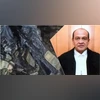 "Burnt cash at Justice Yashwant Varma house")
The controversy began with a fire at Justice Yashwant Varma's official residence on March 14. (Screengrab)
Listen to This Article
The Supreme Court (SC) on Wednesday reserved its judgment on a petition filed by Justice Yashwant Varma of the Allahabad High Court, Bar and Bench reported. The petition challenges the recommendation made by former Chief Justice of India (CJI) Sanjiv Khanna for Justice Varma’s removal, following the discovery of unaccounted cash at his official residence in Delhi.
A Bench of Justices Dipankar Datta and AG Masih heard the matter and questioned the delay in approaching the court, noting that Justice Varma acted only after an in-house committee had submitted adverse findings.
During the hearing, the judges said they may not interfere in the matter since the issue is now before Parliament. “The points you are raising are major, but could have been raised before, and thus your conduct does not inspire confidence, and your conduct says a lot. You don't want something to spill here. Let Parliament decide. Why should we decide whether it is your money or not? That was not the remit of the in-house committee,” the Bench observed.
Justice Varma, in his plea, argued that the committee did not properly examine the source of the cash recovered from his residence.
Also Read

 "Supreme Court, SC")
 "Supreme Court, SC")
 "Supreme Court, SC")
Justice Varma’s petition also asked the top court to declare the recommendation for his removal as “unconstitutional and ultra vires”. He claimed that the in-house inquiry was started without any formal complaint, and that a press release by the Supreme Court subjected him to an “unprecedented” media trial.
The case
The controversy began with a fire at Justice Varma’s official residence on March 14. Firefighters responding to the blaze discovered large amounts of unaccounted cash. A video showing bundles of burning currency was also circulated.
Justice Varma denied the corruption allegations, stating that he was being framed. On March 22, then-CJI Khanna set up a three-member in-house panel to investigate.
Following this, Justice Varma was sent back to the Allahabad High Court and re-administered the oath. However, the CJI withdrew his judicial work.
The committee began its work on March 25 and submitted its findings on May 3. Based on its report, CJI Khanna recommended Justice Varma’s removal to the President of India. Justice Varma then moved the Supreme Court, arguing that the in-house procedure lacked fairness. He said he was not told how the inquiry would proceed and was not allowed to respond to evidence.
He also said the report did not clarify how much cash was found or who it belonged to. Furthermore, he claimed that the CJI pressured him to resign or take voluntary retirement within a short time frame.
In-house committee can only recommend, says Kapil Sibal
Appearing for Justice Varma, Senior Advocate Kapil Sibal argued that the in-house committee only has the power to recommend — not initiate — removal proceedings. “In-house process is limited to recommendation or advice and not power to initiate the proceedings,” Sibal said, as quoted by the report.
He said using the report to start impeachment proceedings violates Article 124 of the Constitution and the Judges Inquiry Act, 1968.
The Bench responded, “So, Article 124 and Judges Inquiry Act are the only ones for removing a judge. That’s all you say. The in-house process has been affirmed by the Supreme Court in three judgments. What relief can we grant if we are with you?”
The Bench also referred to the Judges Protection Act, 1985, and pointed out that Justice Varma should have raised these concerns earlier. “You say you are not heard, and then there is a delay. Whatever observations you are getting now, you could have got then,” Justice Datta said.
More From This Section
 "Enforcement Directorate, ED")
 "Nitish Kumar")
 "PM Modi in Surat Gujarat rally")
 "kolkata Rains")
 "S Jaishankar, Jaishankar")
Don't miss the most important news and views of the day. Get them on our Telegram channel
First Published: Jul 30 2025 | 3:11 PM IST