


Case of princely titles: Why abolished royal terms still stir legal debate
Privy purses once played an important role in facilitating the integration of princely states into the Indian Union after Independence, but the royal privileges and titles were later abolished
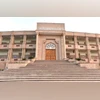 "Rajasthan High Court")
Under Article 14 (equality), Article 18 (abolishment of titles), and Article 363‑A, the Constitution does not recognise any titles and considers all the citizens as equals before the law. (Photo: Live Law)
Listen to This Article
While royal titles such as ‘Maharaj,’ ‘Princess,’ ‘Raja,’ and ‘Nawab’ were abolished long ago under the Indian Constitution, some descendants of former royal families continue to use them.
In a recent ruling against such usage, the Rajasthan High Court directed members of a Jaipur royal family to remove the prefixes “Maharaj” and “Princess” from their petitions in a house tax dispute between the heirs of late Jagat Singh and Prithviraj Singh. The court warned that if the order was not complied with within a week, their 24-year-old case could be dismissed.
However, this is not the first instance of erstwhile royals clinging to their titles. Similar cases have emerged over the years, despite such titles being constitutionally abolished. Privy purses once played an important role in facilitating the integration of princely states into the Indian Union after Independence, but the royal privileges and titles were later abolished, sparking several legal disputes and public backlash.
Let’s trace the history of these developments, from the constitutional amendments that ended royal entitlements to the key court cases that reaffirmed the principle of equality in modern India.
What does the Constitution say?
Under Article 14 (equality), Article 18 (abolishment of titles), and Article 363-A, the Constitution does not recognise any titles and considers all the citizens as equals before the law.
Also Read

 "Chinese food")
 "Sam Altman")
 "doomscrolling, brain rewiring, brain health")
 "AI healing")
 "Donald Trump, Trump")
In 1950, Article 18 was introduced to eliminate the use of royal and hereditary titles and promote equality in the Republic of India. This meant that titles such as Maharaja, Nawab, or Nizam could not be officially recognised.
Later, in 1971, the Constitution was amended to abolish the remaining privileges and privy purses, emphasising that such titles were incompatible with the democratic ethos of the Republic of India.
The 26th Constitutional Amendment, passed during prime minister Indira Gandhi’s term, stated: “The concept of rulership, with privy purses and special privileges unrelated to any current functions or social purposes, is incompatible with an egalitarian social order.”
The amendment repealed Articles 291 and 362, abolished privy purses for erstwhile rulers and inserted Article 363-A. Article 363-A declared that the recognition of rulers and their privy purses, privileges and dignities “shall cease and all rights, liabilities and obligations in respect of the payment of privy purses” stood extinguished.
Abolition faced backlash
However, the move was met with backlash by royal families who alleged that they were promised these titles and an annual privy for the smooth integration of princely states under the Merger Agreement of 1948. Several families contended that the amendment violated their fundamental rights and the basic structure of the Constitution.
Just a year before the Constitution was amended, Madhav Rao Scindia, the former ruler of Gwalior in Madhya Pradesh, along with other ex-royals, challenged the Union of India over the abolition of privy purses and other privileges. The petitioners argued that these allowances had been promised in exchange for a smooth accession to India and were constitutionally protected under Articles 291 and 362. They claimed that the government’s withdrawal of privy purses breached legal promises and their entitlements.
The Supreme Court rejected the petitioners’ claims, holding that the former rulers’ allowances were social security measures rather than absolute property rights, and therefore could be reasonably altered or withdrawn in the public interest. The court also clarified that changes to such privileges were policy matters, not subject to judicial interference unless arbitrary or unreasonable.
Similar cases kept surfacing over the years, such as the 1993 case of Raghunathrao Ganpatrao vs Union of India. According to Live Law, the Supreme Court ruled that the amendment was a legitimate exercise of Parliament's constituent power under Article 368. It added that the Constitution's basic structure could be amended, provided the amendment did not alter its fundamental framework.
Raja Laxman Singh vs State of Rajasthan (2022)
In one of the most recent hearings, the Rajasthan High Court passed fresh orders concerning the matter of whether former rulers can use Raja, Nawab, Maharaja or similar titles in court pleadings and public offices after the 26th Amendment.
While hearing a petition, the high court noticed the use of the title “Raja” in the cause title. The court emphasised that recognition of rulers and their titles had ceased and that no one could now claim such hereditary designations in court proceedings.
The court directed the petitioners to file amended cause titles deleting the royal prefixes. It also stated that these titles cannot be used in constitutional courts, tribunals, public offices or the public domain.
DB Vinod Agarwal vs Uthradom Thirunal Marthanda Varma (2013)
According to SooperKanoon, DB Vinod Agarwal, along with other petitioners, moved the Kerala High Court to challenge a government advertisement describing Uthradom Thirunal Marthanda Varma, head of the Travancore royal family, as 'His Highness' and 'Thiruvithamkoor Maharajavu.' They argued that using such titles in government materials was unconstitutional.
However, the court said names and titles were unaffected because names are not “privileges” under those articles. It added that such phrases were used in a reverential sense and had no legal consequence. The ruling allowed the ceremonial use of royal titles in private or cultural contexts.
More From This Section
 "Supreme Court, SC")
 "iPhone 17, iphone")
 "Pinarayi Vijayan, Kerala CM")
 "Uddhav Thackeray, Uddhav, Thackeray")
 "Keir Starmer")
Don't miss the most important news and views of the day. Get them on our Telegram channel
First Published: Oct 08 2025 | 3:02 PM IST