


SC rejects plea claiming buyers unaware of TDS rule in property deals
He claimed that in the absence of any administrative mechanism for the awareness of verification at the stage of the property registration, this assumption becomes unreasonable
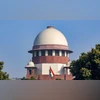 "SC, Supreme Court")
A view of Supreme Court of India. (File Photo: PTI)
Listen to This Article
The Supreme Court on Wednesday dismissed a petition that had alleged the absence of a mechanism to make people aware of their obligation about the tax deducted at source (TDS) while purchasing property valued at more than ₹50 lakh.
A bench of Justices Vikram Nath and Sandeep Mehta refused to entertain the plea that had claimed that honest purchasers acting in good faith were later exposed to penalty and interest, despite having no intention to default.
"Dismissed," the bench ordered.
The petitioner, who appeared in the court in person, told the bench that the plea relates to the issue concerning the enforcement of a provision of the Income Tax Act in property transactions exceeding ₹50 lakh.
"Under the present framework, the entire TDS obligation or liability is placed solely on the buyer on the implicit assumption that every property purchaser, regardless of the background and expertise, possesses a working knowledge of the income-tax law," the petitioner said.
Also Read

 "Himanta Biswa Sarma, Himanta Biswa")
 "SC, Supreme Court")
 "Supreme Court (Photo: Wikipedia)")
 "SC, Supreme Court")
He claimed that in the absence of any administrative mechanism for the awareness of verification at the stage of the property registration, this assumption becomes unreasonable.
Referring to his personal case, the petitioner said he was a first time homebuyer, unaware of this requirement.
"This demonstrates that the issue is systemic. Many of the buyers complete registration without TDS verification," he said.
The petitioner claimed that there was no mechanism to check compliance at the registrar's office.
He made clear that he was not challenging the tax liability or validity of the provisions of the Income Tax Act.
"I am only seeking a limited direction for institutional safeguards.... So that the citizens are not unknowingly pushed into default by the systemic gap," he said.
The petitioner argued that such measures would protect citizens, improve voluntary compliance and safeguard government revenue.
(Only the headline and picture of this report may have been reworked by the Business Standard staff; the rest of the content is auto-generated from a syndicated feed.)
More From This Section
 "ECI, election commission of india, election commission")
 "Shubhanshu Shukla")
 "Raghav Chadha, Raghav, Chadha")
 "Parliament, Lok sabha")
 "Aiims New Delhi, All India Institute of Medical Science")
Don't miss the most important news and views of the day. Get them on our Telegram channel
First Published: Feb 11 2026 | 6:18 PM IST