


SC raps govt over NIA trial delays, says bail likely without special courts
Supreme Court gives Centre, Maharashtra four weeks to respond on setting up exclusive NIA courts; says failure to act may lead to bail being granted in delayed terror-related trials
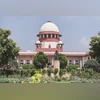 "Supreme Court")
The SC made it clear that merely designating existing courts as special NIA courts would not meet the required standards
Listen to This Article
The Supreme Court on Friday criticised the Centre for not setting up enough special courts to handle terror-related cases under the National Investigation Agency (NIA) Act, Bar and Bench reported.
A Bench comprising Justices Surya Kant and Joymalya Bagchi observed the lack of dedicated NIA courts was causing delays in trials. As a result, undertrials may have to be released on bail if their cases continue to be stalled.
“If the authorities fail to establish special courts with requisite infrastructure to conduct time-bound trials, the courts would invariably be without any option but to release undertrials on bail. How long can such suspects be kept behind bars when there is no mechanism for speedy trial?” the SC Bench noted in its order.
Court heard bail plea in terror case
The top court was hearing a bail petition filed by Kailash Ramachandani, an undertrial in an NIA case. On May 23, it had asked the Centre to respond to the plea. At that time, the court had emphasised that trials in such sensitive cases should ideally proceed on a day-to-day basis. It had also noted that the creation of special courts and related infrastructure falls under the executive’s responsibilities and must be handled in consultation with the Chief Justice of the concerned High Court, after reviewing case pendency, Bar and Bench reported.
Also Read

 "Jairam Ramesh, Jairam")
 "Lalu Prasad Yadav, Lalu Prasad, Lalu")
 "Nimisha Priya")
 "Burnt cash at Justice Yashwant Varma house")
 "Supreme Court")
Govt gets more time, but court is not impressed
When the matter was heard again on Friday, the court acknowledged that the under-secretary of the NIA had submitted an affidavit. However, it found no concrete steps had been taken to set up exclusive courts for speedy trials. “You want prosecution under special Acts also and yet no speedy trial for the accused,” the Bench said.
The judges made it clear that merely designating existing courts as special NIA courts would not meet the required standards. “It goes without saying that it would require creation of posts in the superior judicial services cadre and also requisite ministerial staff.
The bail infrastructure would need suitable courtrooms. None of those steps have been taken,” the top court observed. “An impression is being created that just designating an existing court as a special court under Section 11 of the NIA Act, 2008, satisfies our earlier order. This is rejected.”
Last chance given to Centre, Maharashtra
Despite the delay, the Supreme Court granted a final opportunity to the Centre and the State of Maharashtra to address the issue. “We had earlier stated that if exclusive special courts are not set up, then the petitioner’s prayer for bail shall be considered on merits. List after four weeks. Last opportunity to the Union of India and respondent-state,” the Bench said.
More From This Section
 "Enforcement Directorate, ED")
 "Narcotics, drugs")
 "Bhupesh Baghel, Bhupesh, Baghel")
 "Manik Saha, Manik, Tripura CM")
 "gavel")
Don't miss the most important news and views of the day. Get them on our Telegram channel
First Published: Jul 18 2025 | 2:51 PM IST