


Super El Niño 2026 threat grows: Why India could face major risks
A developing Super El Niño risks weakening India's monsoon, hurting farm output, raising food prices and intensifying heatwaves, posing risks to the economy at large
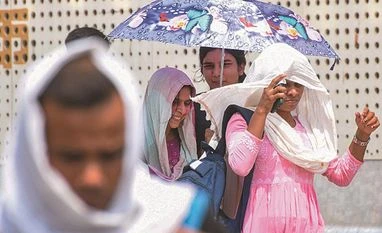 "heatwave summer heat")
El Niño also raises temperatures, placing additional strain on India’s already stressed power grid.
Listen to This Article
The possibility of a potential “Super El Niño” this year has raised global alarm, with early forecasts suggesting the climate phenomenon could emerge faster than expected and grow into one of the strongest weather events recorded in decades. Scientists warn that the extreme weather event could trigger widespread disruption globally, including in India.
What is El Niño?
El Niño is a natural climate phenomenon that occurs when surface waters in the central and eastern Pacific Ocean become unusually warm. The warming weakens or alters global wind patterns, setting off a chain reaction that disrupts weather systems around the world. The phenomenon derives its name from Spanish for “The Little Boy”, a term coined centuries ago by Peruvian fishermen who observed warmer ocean waters around Christmas.
The event typically develops every two to seven years and can last up to a year. While it begins in the Pacific Ocean, its consequences are global.
What makes a “Super El Niño” different?
A “Super El Niño” is an extreme version of the same climate event. It occurs when Pacific Ocean temperatures rise far above normal levels, typically crossing 2 degrees Celsius above the long-term average.
These rare events are significantly more disruptive than ordinary El Niño episodes because they tend to amplify weather extremes across the globe. Past Super El Niño years have been linked to severe droughts, devastating floods, crop failures, wildfires and record-breaking heat.
Also Read

 "narendra modi, Giorgia Meloni")
 "student loan, student scholarship, loan, education visa, US education")
 "Donald Trump, Trump")
 "electricity, power sector")
 "Board Exam, Students")
According to the US National Oceanic and Atmospheric Administration (NOAA) Climate Prediction Centre, there is a growing possibility that the developing El Niño could become strong in 2026. Several climate models suggest the event may rival or even exceed major El Niño episodes recorded in 1982-83, 1997-98 and 2015-16.
NOAA said El Niño conditions are developing rapidly in the Pacific Ocean, with nearly a two-thirds chance that the phenomenon could strengthen into a “strong” or “very strong” event during the latter half of the year. Current data also shows sea surface temperatures in key monitoring regions are around 0.5 degrees Celsius above the long-term average, an early indicator that El Niño conditions are beginning to form.
Why is there growing concern around El Nino this time?
According to several reports, the transition from the previous La Niña cycle is happening unusually quickly, which could signal the early stages of a stronger event. Scientists warn that a stronger El Niño can intensify weather extremes globally, including droughts, floods and extreme heatwaves. Experts also caution that the combination of El Niño and rising global temperatures could push the planet into another phase of record-breaking heat.
Why is India particularly vulnerable?
India’s vulnerability to El Niño stems largely from its dependence on the southwest monsoon, which provides nearly 70 per cent of the country’s annual rainfall between June and September. When El Niño strengthens, it tends to weaken the monsoon winds that carry rainfall across the subcontinent, suppressing precipitation across northern, central and western regions while sometimes triggering excess rainfall along parts of the southern and eastern coastline.
Historically, El Niño has often weakened India’s monsoon rainfall. Between 1951 and 2022, around 60 per cent of El Niño years recorded below-average rainfall in the country. Several major droughts in India have also coincided with El Niño events. The India Meteorological Department (IMD) has already warned that the developing El Niño could weaken the 2026 monsoon season and increase the risk of drought-like conditions in several regions.
The impact, however, is rarely uniform across regions. States including Maharashtra, Karnataka, Andhra Pradesh, Odisha, Gujarat and Rajasthan have historically remained among the most drought-prone during El Niño years. At the same time, some coastal regions may witness episodes of excess rainfall and flooding. According to Dr Vishwas Chitale, Fellow, Council on Energy, Environment & Water (CEEW), “A developing El Niño, particularly if it intensifies into a strong or ‘super’ El Niño event, can significantly amplify summer heatwaves in India. El Niño conditions typically weaken cloud formation and rainfall over large parts of the Indian subcontinent, leading to drier conditions, reduced soil moisture, and clearer skies that allow temperatures to rise more rapidly. This often translates into longer, more intense, and more frequent heatwave episodes, especially across northwest, central, and peninsular India."
How could India’s agriculture and economy be affected?
A weak monsoon triggered by El Niño poses one of the biggest risks to India’s agriculture sector. Lower rainfall and prolonged dry spells can reduce agricultural production, damage soil moisture and increase dependence on irrigation, raising costs for farmers already struggling with climate uncertainty. Rice, pulses, sugarcane and oilseeds are among the crops most vulnerable to rainfall deficits during El Niño years.
The impact often extends beyond farms into household budgets and the wider economy. Lower crop output can push up food prices, particularly for staples such as rice, pulses, vegetables and edible oils.
Dr SN Mishra, visiting professor, TERI School of Advanced StudiesClimate Change Consultant for United Nations, World Bank & ADB told Business Standard that, "More than 50 per cent of India’s agricultural land is still rainfed, making the agriculture sector highly vulnerable to a Super El Niño-induced weak monsoon. Reduced rainfall and prolonged dry spells can adversely affect kharif crop yields. In addition, inadequate filling of reservoirs, which support irrigation and hydroelectricity, could further compound food production during the rabi season and affect energy security. Lower agricultural output would inevitably exert upward pressure on food prices and contribute to inflation."
Past El Niño events have highlighted how severe the damage can become. During the 2015-16 Super El Niño, India’s monsoon rainfall fell to 86 per cent of the long-period average, triggering drought-like conditions across several states.
More recently, the 2023-24 El Niño contributed to erratic rainfall, intense heatwaves and rising temperatures across India. Mango and cashew growers in parts of western and southern India reported heavy losses, while apple growers in Kashmir and Himachal Pradesh faced concerns over unusually early budding caused by warmer temperatures.
According to Professor Mishra, "The impacts would not be confined to crops and farmers alone, but would extend to Agri-based industries, rural livelihoods, water resources and inflation. A weak monsoon can reduce rural purchasing power, increase fiscal pressure through drought mitigation measures and impact broader economic growth."
El Niño also raises temperatures, placing additional strain on India’s already stressed power grid. At the same time, a weaker monsoon reduces water levels in rivers and reservoirs that hydroelectric plants depend on, increasing pressure on the country’s energy system as demand for cooling rises during extreme heatwaves. "Our analysis of the last four decades shows that the frequency of very hot days and warm nights has generally been significantly higher following El Niño years. This year, the IMD has also forecast below-normal southwest monsoon rainfall, which has major implications for India’s agriculture, water resources, and overall economy. An emerging El Niño therefore underlines the need for much stronger preparedness across both the summer heatwave and monsoon seasons, including heat-health early warning systems, water management, climate-resilient agriculture, and improved disaster preparedness planning", said Chitale, Fellow, CEEW.
The developing Super El Niño, therefore, poses significant risks to India, particularly for its agriculture sector and broader economy.
More From This Section
 "PP Chaudhary")
 "NTA, National testing agency")
 "Supreme Court, SC")
 "Umar Khalid")
 "spice jet")
Don't miss the most important news and views of the day. Get them on our Telegram channel
First Published: May 20 2026 | 10:52 AM IST