


Supreme Court says courts cannot decide on duration of law courses
Bench says legal education policy must be shaped through wider consultation among academicians, jurists, Bar and researchers while hearing plea to shorten five-year law course
 "SC, Supreme Court")
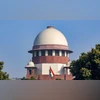
Responding to the submissions, the Chief Justice observed that questions surrounding legal education policy require broad consultation and cannot be resolved by the court alone. (Photo:PTI)
Listen to This Article
The Supreme Court on Monday said it cannot dictate policy choices relating to legal education while hearing a public interest petition seeking to shorten the five-year integrated LL.B. programme to four years. A Bench of Chief Justice of India Surya Kant and Justice Joymalya Bagchi was considering a plea filed by advocate Ashwini Upadhyay, who sought the creation of a Legal Education Commission comprising eminent jurists to examine reforms in the legal education system, including the structure and duration of law degrees.
Mentioning the petition for urgent listing, Upadhyay argued that the five-year integrated law programme discourages meritorious students from entering the profession. He told the court that most professional courses in India are completed in four years and suggested that the present structure of the law course fails to attract top talent.
“This is a PIL to form a Legal Education Commission consisting of eminent jurists to form the syllabus. All professional courses like CA, B.Tech are for four years, and law is five. It is failing to attract the best talent,” he submitted.
Responding to the submissions, the Chief Justice observed that questions surrounding legal education policy require broad consultation and cannot be resolved by the court alone. During the hearing, the Chief Justice also recalled the origins of the integrated law programme in India, noting that the first five-year course was introduced not by the National Law School in Bengaluru but by Maharshi Dayanand University in Rohtak in the early 1980s.
The Bench emphasised that the judiciary is only one among several stakeholders involved in shaping legal education.
Also Read

 "SC, Supreme Court")
 "SC, Supreme Court")
 "Supreme Court, SC")
“But the judiciary is only one stakeholder. We cannot thrust our views. Academicians, jurists, the Bar, social and policy researchers are there. There should be deliberation with them,” the Chief Justice said.
When the petitioner claimed that many university chancellors were not supportive of the five-year format, the court asked why judicial intervention was required if universities themselves opposed the existing structure.
“Then why can't they reduce the term? Why is a court order needed?” the CJI asked.
Upadhyay replied that any such change would also require a decision from the Bar Council of India.
The Bench directed that the matter be listed again in April 2026.
The petition contends that the five-year integrated law course imposes an unnecessary financial and time burden on students and seeks directions to the Union government to establish a Legal Education Commission or expert committee comprising educationists, jurists, retired judges, advocates and professors to review the syllabus, curriculum and duration of LL.B. and LL.M. programmes.
According to the petitioner, the National Education Policy, 2020 encourages four-year undergraduate programmes across disciplines, but the Bar Council of India has not initiated a corresponding review of legal education.
The plea also states that the longer duration delays students from entering the workforce and places a heavier financial burden on families, particularly those from middle- and lower-income backgrounds.
Upadhyay had earlier approached the court seeking the introduction of a three-year LL.B. course immediately after Class 12. In April 2024, the Supreme Court declined to entertain that petition, with the then Chief Justice DY Chandrachud observing that the five-year programme had been beneficial for the profession.
More From This Section
 "sailors")
 "Parvesh Sahib Singh Verma, Parvesh Sahib")
 "Lok Sabha, LS")
 "Satellite, Telecom industry, Department of Telecom, TRAI, AGR, Telecom Regulatory Authority of India")
 "Oil, Oil tankers, Oil tanker trucks")
Topics : Supreme Court legal Bar Council of India
Don't miss the most important news and views of the day. Get them on our Telegram channel
First Published: Mar 16 2026 | 7:16 PM IST