


Tentative rollout of Ayodhya mosque project at Dhannipur set for April 2026
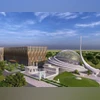
Faruqi said the first mosque layout plan was rejected by the ADA, but even before that, the IICF had decided to drop it following objections from the community over its futuristic, modern design
 "Ayodhya mosque")
Faruqi admitted that big donors from the community in the country haven't shown much enthusiasm for the mosque construction | Credit: PTI Photo
Listen to This Article
Thirty-three years after the Babri Masjid in Ayodhya was razed by a mob on this day in 1992, paving the way for the grand Ram temple at the site, the tentative timeline for the new mosque project rollout at Dhannipur, a village some 25 km from the holy city, could be around April 2026, head of the trust tasked with the project said.
If all fits in place, and of course, subject to the Ayodhya Development Authority's (ADA) approval of the revised layout plan of the mosque that we hope to submit by December-end, a tentative timeline of the mosque project rollout could be around April 2026, Zufar Faruqi, chairman of the Indo-Islamic Cultural Foundation (IICF), the trust tasked with the construction of the mosque-complex project, told PTI.
However, despite the cacophony of claims and counterclaims surrounding the much-awaited project, uncertainties still shroud the original mosque plan, more than five years after the Ayodhya district administration, acting on Supreme Court orders, formally allocated five acres of land for it.
Faruqi said the first mosque layout plan was rejected by the ADA, but even before that, the IICF had decided to drop it following objections from the community over its futuristic, modern design and settle for a more conservative, traditional one one that is near ready.
The ADA's approval is obviously the key first step towards the start of the much-delayed mosque construction, but the IICF is staring at other pressing issues, including the lack of enough land at and around the Dhannipur site.
Also Read

 "Modi, Narendra Modi")
 "Prime Minister Narendra Modi during the Dhwajarohan ceremony at the Ram Temple in Ayodhya, Uttar Pradesh, on Tuesday")
 "Modi, Narendra Modi, Mohan Bhagwat")
 "Mohan Bhagwat, Mohan")
 "PM modi ram temple, ayodhya")
These are early days. We do wish to make use of the land allotted to us, but should there be a problem in acquiring additional land for the mosque project, the possibility of the entire project being carried out in a phased manner, but at different locations, is there, Faruqi told PTI.
This seemed to be the first official hint at the mosque project coming up in parts, with the likelihood of some construction of the overall complex being done away from the present Dhannipur site that was formally handed over by the state government in August 2020.
After a hotly-contested and prolonged legal battle, a five-judge Constitution Bench of the Supreme Court on November 9, 2019, handed over 2.77 acres of land, which was at the centre of a long legal scrutiny, to a trust for the construction of a Ram temple at the site and allotted five acres of land at a "prominent site" in Ayodhya for the mosque.
We were allotted five acres of land at Dhannipur, but due to certain technicalities, the effective area is around four acres only, so there is certainly quite a possibility of the project coming at more than one location, Faruqi told PTI.
However, he rejected the theory that the Dhannipur site, being far away from the main Ayodhya city, could have also forced a location change for the mosque and the adjoining complex, including a 500-bed multispecialty hospital, a community kitchen, and educational institutions, among other things.
What's the locus standi of those flagging such issues? One could have still understood had the objections come from the Wakf Board, but why should others have a problem with this site, Faruqi, also the chairman of the UP Sunni Wakf Board, asked.
Criticism and lack of consensus over the project design forced a layout change. Now, delays in securing key clearances have extended the mosque project launch, even as the construction of the Ram temple is now formally complete with the unfurling of a Dharm Dhwaj' atop the temple by Prime Minister Narendra Modi recently.
It's unfair to compare the mosque project with the Ram temple construction, which was a public-driven exercise, Faruqi said, admitting that even after securing the ADA nod, the IICF would require big funds.
We estimate that the mosque, along with a wazukhana' (ablution area) and associated constructions, alone would cost around Rs 65 crore. We barely have just over Rs 3 crore at the moment, Faruqi said, admitting that both donations and public response to the mosque project were way too subdued at the moment.
The project can start even if we have the initial Rs 10-15 crore in our kitty. That's why we are eager to secure key mandatory clearances, such as the Foreign Contribution (Regulation) Act (FCRA), as it would enable the trust to seek donations from the overseas community. We are confident that the fund flow too will gather pace after the project takes off, he said.
Having submitted all the necessary details to the Centre for securing FCRA clearance, the IICF is now anxiously hoping for a positive outcome by the year-end or early next year.
Faruqi admitted that big donors from the community in the country haven't shown much enthusiasm for the mosque construction.
The big ones from the community haven't been as keen for the cause. Door-to-door fund collection is both tedious and needs resources that we lack, and hence the best option is to try and focus on big donors overseas after FCRA clearance, he added.
The mosque debate has also been in the news of late due to some varying political statements.
First, the now-suspended Trinamool Congress MP, Humayun Kabir, stoked passions by announcing a Babri masjid-style mosque plan in West Bengal's Murshidabad district.
Days later, Defence Minister and Lucknow MP, Rajnath Singh, stirred both curiosity and criticism with his claim that the country's first prime minister, Jawaharlal Nehru, favoured constructing the Babri mosque from government funds.
(Only the headline and picture of this report may have been reworked by the Business Standard staff; the rest of the content is auto-generated from a syndicated feed.)
More From This Section
 "Rahul Gandhi, Rahul, Congress leader")

 "Noida Pollution, Pollution, Smog")
 "MGNREGA, MGNREGA wages, labour market, MGNREGA job scheme")
 "ECI, election commission of india, election commission")
Don't miss the most important news and views of the day. Get them on our Telegram channel
First Published: Dec 06 2025 | 2:16 PM IST