


Social media firms must take responsibility for hosted content: Vaishnaw
Vaishnaw said platforms must ensure user safety, curb deepfakes and share revenue fairly with content creators, as the government pushes stronger rules and faster takedown timelines
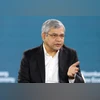 "India's Technology Minister Ashwini Vaishnaw")
Ashwini Vaishnaw, Union Minister for Electronics and Information Technology and the Ministry of Information and Broadcasting | Image Credit: Bloomberg


Listen to This Article
Social media and internet intermediaries must take responsibility for the content hosted on their platforms to make them safer for children, women and other online users, Union Minister for Electronics and Information Technology and the Ministry of Information and Broadcasting, Ashwini Vaishnaw, said.
“Platforms must wake up, must understand the importance of reinforcing trust in the institutions that human society has created over thousands of years,” Vaishnaw said at the Digital New Publishers Association (DNPA) Conclave 2026.
Social media platforms that do not adopt adequate safety measures to keep their users protected from harmful content will be held liable, he said.
“Non-adherence to these principles will definitely make them responsible because the nature of the internet has changed now, and synthetic content should not be generated without the consent of the person whose face, voice or personality has been used to create the content,” Vaishnaw said.
The time has come to make the big inflectional change, he said, asking platforms to cooperate with the change that society needs.
Also Read

 "Securities and Exchange Board of India, Sebi")
 "Ashwini Vaishnaw, Ashwini, Vaishnaw, AI Summit, India AI Impact Summit 2026")
 "Modi, Narendra Modi")
 "Australia's social media ban for kids sparks debate on advertising ethics")
 "Instagram on Google TV devices")
Earlier this month, Vaishnaw, during the AI Impact Summit, told reporters that the government was in talks with social media platforms and internet intermediaries to impose a complete age-based ban on children under a certain age from using social media.
“This is something which has now been accepted by many countries that age-based regulation has to be there. It was part of our DPDP (Digital Personal Data Protection) Act when we created this age-based differentiation on the content which is accessible to young people,” Vaishnaw had then said.
Apart from a ban on children below a certain age using social media platforms, the government is also in discussions with the intermediaries on the best possible solutions to contain deepfakes, he had then said.
The call for a ban on children below a certain age using social media has gained ground after Australia became one of the first countries to implement it nationwide. In India, Andhra Pradesh’s IT minister, Nara Lokesh, also hinted at the possibility of implementing the rule in the state, following which other states also said they could consider a similar move.
To make platforms more accountable for the content hosted on their platforms, the Ministry of Electronics and Information Technology had earlier this month also made amendments to the Intermediary Guidelines and Digital Media Ethics Code of 2021, reducing the response time for social media platforms and internet intermediaries to take down objectionable and unlawful content from 36 hours to three hours. The new rules went into effect on February 20.
On Thursday, Vaishnaw also said that social media and internet intermediaries must share revenue with content creators in a fair way so that conventional media, large and small influencers, professors, researchers and news channels, which upload their content to these platforms and live in far-flung areas, benefit proportionately.
“Everywhere, the principle now has to be set right, and there has to be a fair share of revenue with the people who are creating the content,” he said.
More From This Section
 "A drone flies over a neighborhood in Houston, Texas")
 "Indian Railways")
 "CP Radhakrishnan")
 "Car accident pune, car accident, Porsche car, Porsche, car")
 "gavel")
Don't miss the most important news and views of the day. Get them on our Telegram channel
First Published: Feb 26 2026 | 8:31 PM IST