


Centre drops public consultation for atomic and critical mineral mining
The environment ministry has exempted mining of atomic, critical, and strategic minerals from public consultations, citing national defence, security, and strategic requirements
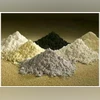 "Critical minerals")
The environment ministry has exempted mining of atomic, critical, and strategic minerals from public consultations, citing national defence, security, and strategic requirements. |Photo: American Geosciences Institute
Listen to This Article
The Ministry of Environment, Forest and Climate Change has reportedly exempted mining projects involving atomic, critical, and strategic minerals from the process of public consultation. The exemption has been allowed in view of national defence and security requirements, and other strategic considerations, the ministry said in a new office memorandum, according to a report by The Indian Express.
The move comes after requests from the Ministry of Defence and the Department of Atomic Energy (DAE) and all such projects will now be assessed directly at the central level, regardless of their size, through sectoral expert appraisal committees, the national-daily said.
Why has critical minerals mining been exempted?
The ministry has relied on provisions under the Environment Impact Assessment (EIA) Notification, 2006, which already allows exemptions for projects connected to national defence and security or other strategic concerns, the report said. Public consultation under the EIA framework usually involves hearings with affected communities and written submissions from stakeholders, aimed at weighing the environmental and social impacts of proposed projects.
By invoking these provisions, the government has removed the requirement for public consultation in cases of mining proposals concerning minerals listed under the Mines and Minerals (Development and Regulation) Act, 1957, as amended in 2023. This covers atomic minerals notified in Part B and critical and strategic minerals in Part D of the Act’s First Schedule.
In a request to the environment ministry dated August 4, the defence ministry had stressed on the importance of rare earth elements for the sector. It noted their use in a wide range of equipment, including radars, sonar systems, communication and display tools, vehicle mounting systems, and precision-guided weapons.
Also Read

 "breakfast timing matters")
 "Special Breaking News")
 "V Anantha Nageswaran, Nageswaran, Anantha")
 "A traveler puts a tag on their luggage.")
 "ONGC")
According to the ministry, India faces a high supply risk as resources of rare earths are scarce domestically and are concentrated in limited regions globally. It argued that ensuring a steady domestic supply was crucial for defence preparedness.
The Department of Atomic Energy, in a separate letter dated August 29, emphasised the strategic role of thorium and uranium. Thorium extracted from beach sand minerals such as monazite is a key fuel for the country’s third-stage atomic energy programme. The department said there was a need to enhance production of these minerals through the development of new deposits.
Recent regulatory changes around critical minerals mining
The exemption is also a part of a wider set of measures introduced earlier this year to speed up the appraisal and approval of mining projects for critical and strategic minerals. The environment ministry has already created a separate category for such projects on its online clearance system, Parivesh, at the request of the Ministry of Mines.
Earlier this month, the government had amended the Van (Sanrakshan Evam Samvardhan) Rules, 2023, inserting a clause for processing forest approvals related to these minerals. The Mines and Minerals (Development and Regulation) Amendment Act, 2023, also added atomic, critical, and strategic minerals to its schedules to promote exploration and mining.
National Critical Mineral Mission gets Centre’s approval
Alongside regulatory changes, the Union Cabinet recently cleared a ₹1,500 crore incentive scheme under the National Critical Mineral Mission (NCMM). The scheme is designed to boost recycling capacity for critical minerals from secondary sources such as electronic waste, lithium-ion battery scrap, and end-of-life vehicle parts.
The initiative seeks to establish an annual recycling capacity of 270 kilo tonnes, generate 40 kilo tonnes of critical minerals, attract investments of around ₹8,000 crore, and create nearly 70,000 jobs. The mission, launched for a seven-year period until 2030-31, has a proposed budget of Rs 16,300 crore and an additional ₹18,000 crore expected from public sector undertakings and other stakeholders.
More From This Section
 "realty sector, real estate, housing")
 "According to industry estimates, in 2024, tea imports from Nepal stood at 15.95 million kg (mkg). A significant quantity was of the orthodox variety that competes with the Darjeeling tea. In 2024, Darjeeling tea production was at 5.6 mkg.")
 "steel, steel industry")
 "goods and services tax, GST")
 "Aerospace, satellites, space")
Don't miss the most important news and views of the day. Get them on our Telegram channel
First Published: Sep 10 2025 | 3:18 PM IST