


High costs, weak infrastructure slow India's green steel transition: EY
EY India notes green hydrogen steel production costs remain nearly double conventional methods but could halve by 2030, though high costs and weak infrastructure slow adoption
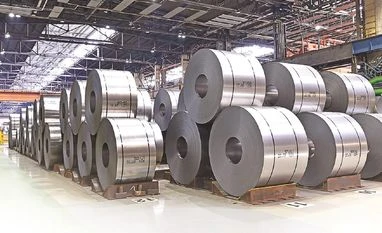 "steel, steel industry")
Alongside high costs, limited infrastructure is a major hurdle.
Listen to This Article
Green hydrogen production for steelmaking in India currently costs nearly double that of conventional methods, but costs are projected to halve by 2030 as economies of scale and technological advancements take effect, according to EY India.
“While India is committed to transitioning to green steel, several interrelated challenges slow its pace compared to global peers. High costs — especially green hydrogen priced at around $4–5 per kilogram — make low-carbon methods economically less viable without subsidies or carbon pricing,” the accounting and consultancy firm said in a report.
Infrastructure gaps hinder adoption
Alongside high costs, limited infrastructure is a major hurdle. Insufficient hydrogen storage and distribution networks, weak scrap collection systems and scarce natural gas pipelines are constraining scalable alternative routes, the report added.
It noted that on the low-carbon steelmaking front, the National Green Hydrogen Mission and other incentives are accelerating hydrogen-based Direct Reduced Iron (DRI), Electric Arc Furnace (EAF) adoption, biochar use, and Carbon Capture, Utilisation and Storage (CCUS) technologies.
Also Read

 "office space")
 "office, employees, workers, service industry")
 "Piyush Goyal, Piyush")
 "real estate")
 "Under Sunjay's leadership, Sona Comstar evolved into a global auto-tech powerhouse. The Gurugram-based company currently has 12 manufacturing facilities with over 6,300 employees across India, China, Mexico, Serbia, and the US, with its revenues touc")
Part of India’s steel decarbonisation roadmap
These technologies form part of the steel decarbonisation roadmap that outlines a phased approach to cutting emissions while safeguarding energy security and industrial competitiveness, within India’s larger goal of achieving net-zero emissions in the steel sector by 2070.
The report also highlighted a major challenge in market pressures and mindset inertia. Firms often hesitate to adopt costlier unfamiliar technologies and are usually nudged by external forces such as the European Union’s Carbon Border Adjustment Mechanism (CBAM) and internal policy support like the National Green Hydrogen Mission.
Experts see partial substitution as near-term step
Experts believe partial substitution of coal or fossil fuels with green hydrogen in existing furnaces can cut carbon dioxide emissions by 20–30 per cent in the near term, without requiring a complete infrastructure overhaul.
More From This Section
 "goods and services tax, GST")
 "Aerospace, satellites, space")
 "Manjari Singhal, chief growth and business officer, Cleartrip")
 "Sunjay Kapur's mother, Rani Kapur, on Thursday shot off a letter to the company board, alleging that she was “coerced” into signing documents behind “locked doors”")
 "QSR, FMCG, Packaged food and beverage")
Topics : Green Infrastructure steel Steel Industry hydrogen
Don't miss the most important news and views of the day. Get them on our Telegram channel
First Published: Sep 10 2025 | 1:08 PM IST