


Sluggish demand weighs on Indian steel sector, pulls down prices
The monthly average HRC price (excluding Mumbai) was Rs 52,900 a tonne on April 29, according to data provided by BigMint, a market intelligence company
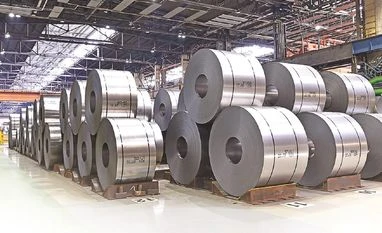 "steel, steel industry")
In the projects segment, prices fell to Rs 51,000-51,500 per tonne in Mumbai, weighed down by continued bid-offer disparity and subdued construction activity due to monsoon rains.
Listen to This Article
Early monsoon, sluggish demand and a correction in Chinese steel prices are weighing on the Indian steel industry.
Prices of hot rolled coil (HRC), a benchmark for flat steel, were around Rs 46,600 per tonne in January but then moved up in the run-up to India imposing a provisional safeguard duty of 12 per cent on imported steel.
The monthly average HRC price (excluding Mumbai) was Rs 52,900 a tonne on April 29, according to data provided by BigMint, a market intelligence company. But as of June 24, trade-level price (distributor to dealer) was down about 4 per cent.
Steel distributors are facing weakened demand, characterised by a decline in inquiries and a slower conversion rate of inquiries into confirmed sales, said BigMint.
In long steel used for construction and infrastructure, trade-level blast furnace rebar prices declined Rs 1,300 per tonne week-on-week to Rs 51,900 per tonne (ex-Mumbai), according to BigMint's assessment on June 20.
Also Read

 "steel, steel industry")
 "Jindal Stainless")
 "Equity Mutual Fund")
 "Dharmendra Pradhan, Dharmendra, Pradhan")
In the projects segment, prices fell to Rs 51,000-51,500 per tonne in Mumbai, weighed down by continued bid-offer disparity and subdued construction activity due to monsoon rains.
Long steel prices are down due to weak market sentiment in monsoon. HRC, a global commodity, is weighed down by high international prices, geopolitical challenges and slowing demand.
Weak prices
Steel producers cited multiple reasons for weak prices. Monsoon aside, the underlying demand environment is shaped by various factors, said Ranjan Dhar, director and vice-president – sales and marketing at ArcelorMittal Nippon Steel India (AM/NS India).
“Exports by the industry are limited, leading to extra material in the domestic market. Trade diversion in the wake of tariff action in the US is playing out — one or two Chinese cargoes have landed in India at a lower price and some bookings have happened from Russia where demand is tepid,” he said.
Another major steel producer, who did not want to be named, said demand from the infrastructure segment is weak due to liquidity issues and monsoons. Passenger vehicle sales have moderated and consumer durables were affected by early monsoon, said the producer.
Slowing demand
India's apparent steel consumption was at 10.93 million tonnes of steel in April, down from 12.96 mt in March and 11.29 mt in February, BigMint’s data showed.
Sumit Jhunjhunwala, vice-president of ICRA, said steel demand growth was projected to moderate to 7–8 per cent in FY26, as the Indian government’s capital expenditure in steel-intensive sectors such as railways and roadways was expected to soften from the peak investment levels during FY21-24.
“Demand growth had eased to 11.5 per cent in FY25, down from a robust 13.7 per cent in FY24,” said Jhunjhunwala.
China factor
China’s steel industry weighs on India. China reduced its January to May production by 1.7 per cent compared to last year, said AM/NS India’s Dhar. “Their domestic consumption is also down, but exports are up 8-10 per cent from last year. That is worrisome for India and needs more protection as the Indian steel industry is in an investment cycle. And investment cannot be stressed.”
After India imposed a safeguard duty, monthly steel imports started declining sequentially from February, Jhunjhunwala noted.
“However, with Asian steel prices trending lower, the risk of a rise in imports from the prevailing low levels remains a possibility. Chinese HRC prices have corrected by almost $20 per tonne since March 2025,” he said.
Steel spreads
Iron ore prices in India fell early June on account of growing inventory and declining exports, said Satnam Singh, senior practice leader and director, Crisil Intelligence.
He said steel margins were expected to remain range-bound with a positive bias, as any expansion due to the imposition of safeguard duty would be set off by the correction in steel prices on account of the early monsoon.
A Motilal Oswal report said that premium hard coking coal prices (CNF Paradip, India) remained range-bound at $180-200 per tonne due to weak global demand. Average coking coal prices improved 5 per cent month-on-month to $206 per tonne in May, led by monsoon-led restocking.
Dhar said demand is expected to improve after monsoon when infrastructure and construction activities pick up. “The RBI cutting interest rates by 50 basis points should further support urban demand.”
More From This Section
 "Office, Office space")
 "The year was a mixed bag for the real estate industry as housing supply slowed down but record investments came in. Industry experts believe that demand will stabilise as sales are likely to be lower compared to 2023.")
 "Goods and Services Tax, GST")
 "Ministry of Heavy Industries, EV charging stations, Electric Vehicles, EV market, automobile industry")
Topics : Steel sector Steel producers Steel output
Don't miss the most important news and views of the day. Get them on our Telegram channel
First Published: Jun 26 2025 | 1:32 PM IST