


Tata group's Chandrasekaran flags supply chain issues amid tariff headwinds
Tata Sons chairman says reciprocal tariffs may be negotiated bilaterally across the globe
 "N Chandrasekaran")
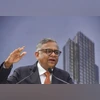
Tata group Chairman N Chandrasekaran. (Photo: PTI)
Listen to This Article
Reciprocal tariffs imposed by US President Donald Trump across countries are likely to be negotiated bilaterally and supply chain models of companies will change over the next few years, N Chandrasekaran, chairman of the Tata group, said on Tuesday.
Speaking at the Rakesh Jhunjhunwala memorial lecture, Chandrasekaran said everyone will have to wait and watch how it plays out. “I think the problem is not the tariffs… the problem is the reversal of a model that we've gotten used to for six-seven decades. It's a model change. If the whole world had operated with tariffs between countries all the time, then the whole supply chain would not have gotten globally integrated,” he said, adding that the problem is the global supply chain has got integrated.
“Very aptly, in globalisation, basically you produce where it is cheap or where it is efficient, and you sell where there is a demand. So, that's a by-product of the model that the world got used to for so long,” Chandrasekaran said. “Now, if you change the model, the underlying supply chain infrastructure has to change and that can't change overnight because there is talent issue, raw material and sourcing issues. There are so many things. That is going to be the fundamental problem. I think it will play out. It's not going to get solved overnight,” he said, adding that the tariffs are not going back to zero.
“I personally believe that it's not going to go back to zero because when something is announced, some part of it will stay. So, where it settles, whether it settles uniformly across countries or it all gets solved bilaterally, only time will tell,” he added.
Against this backdrop, Chandra said India is well-placed economically, and there will be demand for all products, be it healthcare, infrastructure, hotels, or education, in the years to come. “There is a lot of demand and this will go on for a long time,” he said.
Also Read

 "N Chandrasekaran")
 "N Chandrasekaran, Chairman, Tata Sons & Tata Group at the Mumbai Tech Week 2025, Asia's largest AI and tech event in Mumbai on Friday 28th Feb, 2025-KAMLESH PEDNEKAR")
 "Indian Institute of Science, IISc")
 "Natarajan Chandrasekaran")
On artificial intelligence (AI) and the future of jobs, Chandra said routine jobs will get automated. “But that doesn't mean all jobs will disappear. It just means the nature of work is evolving. I’ve painted a very optimistic picture, and I genuinely believe it’s a realistic one. Some people think AI will take over and leave no jobs behind, but I believe that’s a misguided perspective,” he said.
On working hours, Chandra said that will depend on the nature of the assignment. “We often talk in general terms about work hours — whether we’ll have 40-hour weeks, 70-hour weeks, or even 90-hour weeks — but that’s not really how things work in practice. For many people, myself included, work isn’t confined to strict hours. It’s more like being switched on all the time, 24x7, not in a stressful way, but in a natural rhythm. I sleep well, I rest, I run, but my mind is always ready to switch back into work mode when needed. That’s how it is when you truly enjoy what you do,” Chandra said.
The Tata group chairman added: “Take investment bankers, for example. When there’s a deal happening, they might not go home for days. But once it's done, they might take a week off, just relaxing, meeting friends for coffee or a glass of wine. The nature of work changes based on the role.”
More From This Section
 "National Company Law Tribunal, NCLT")
 "capsules, pharma sector, pharma, medicine, drugs")
 "Drone")
 "drugs, pharma")
 "Supreme Court")
Topics : N Chandrasekaran Trump tariffs trade
Don't miss the most important news and views of the day. Get them on our Telegram channel
First Published: Apr 08 2025 | 9:15 PM IST