In the 2016 Assembly polls, the percentage of the woman voter turnout marginally exceeded the turnout for men, and the trend continued in 2021, with the female voter turnout being 82.01 per cent as against 81.6 per cent for men. In the 2024 Lok Sabha elections, districts such as Dhubri, Barpeta, Nagaon, and Kokrajhar recorded some of the highest female voter turnouts in the country. For example, in Dhubri it was 92.17 per cent.
The male-female voting ratio has also improved steadily, rising from 953 women per 1,000 men in 2019 to 993 in 2024, reflecting gains in both registration and participation.
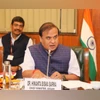
Earlier this week, Assam CM Himanta Biswa Sarma said the state government’s Mukhyamantri Mahila Udyamita Abhiyan (MMUA) reflected its resolve to strengthen Assam’s economy through women-led enterprises. He said stipends under the MMUA had been distributed to nearly 1.2 million women who are members of self-help groups across 50 Assembly constituencies, and the process would be completed in all by February 15 next year. In the first phase, the government has set a target of providing ₹10,000 each to 3.2 million women, involving an expenditure of ₹3,200 crore.
The MMUA aims to strengthen women-led livelihoods and help members of SHGs to become rural micro-entrepreneurs, or “Lakhpati Baideu”, enabling them to earn a minimum of ₹1 lakh a year.
The state continues its other women-centric schemes, such as “Nijut Moina”, which provides monthly financial assistance to girl students. The government is also expanding “Orunodoi”, its flagship income-support scheme for women-led households.
Sarma recently announced that over 3.7 million beneficiaries would receive ₹8,000 on February 20 as an advance Bohag Bihu payment, combining four months of regular assistance with a special festival grant.
For beneficiaries, the impact is reflected in everyday financial decisions.
Gulapi, a domestic worker in Guwahati’s Santipur area, said the Orunodoi amount was usually credited on time, allowing her to save part of it and invest in a Life Insurance Corporation (LIC) policy.
Dipak Sarma, a political analyst, said: “DBT schemes are increasingly used to shape voter behaviour. We saw a similar approach work in Bihar, where transfers made close to elections created expectations and a sense of assurance among beneficiaries, particularly women.”
For some, the schemes have translated into tangible economic outcomes. Mun Bora of Golaghat used monthly assistance to build a house, start a small enterprise, and generate livelihoods for others.
Structural challenges persist. “Women’s Conditions in Assam”, a report by the National Council of Applied Economic Research in January 2025, highlights wide gender disparities in labour force participation and higher unemployment among women. It suggested that welfare transfers alone may not address deeper inequalities.


 "Assam Chief Minister Himanta Biswa Sarma")

