


Year-ender 2025: Generative AI changed videos, photos and content creation
From text-to-video tools and AI image generation to mobile editing and chat-based creation, generative AI quietly reshaped how content was made in 2025
 "Generative AI changed videos, photos and content creation")
Generative AI changed videos, photos and content creation
Listen to This Article
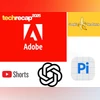
Generative artificial intelligence (AI) played a defining role in creative tools in 2025, moving from limited experiments to being deeply built into everyday software. AI image generation arrived directly inside Photoshop, professional video editing shifted to smartphones through Adobe Premiere, and image edits became possible inside OpenAI ChatGPT and Google Gemini. These changes made it faster and easier for creators to move from an idea to finished content across platforms.
The shift was most visible in how creative tools moved closer to where content is actually made today, on smartphones, short-video platforms, and conversational interfaces. By the end of 2025, generative AI had moved beyond experimentation to become a core foundation for large-scale image, video and content creation.
What is Generative AI
Generative AI is a type of artificial intelligence that can create new content instead of only analysing existing data. It allows users to generate content quickly by giving different kinds of inputs such as text, images, audio or video. Based on these inputs, the system can produce outputs like written text, photos, video clips, sound, animations, or even 3D visuals.
Behind the scenes, generative AI uses neural networks to study patterns and structures in large datasets. By learning how words, images, sounds, and visuals are normally formed, the models are able to generate new content that looks original rather than copied. This ability to create from prompts is what makes generative AI especially useful for content creation across videos, photos, and digital media.
How generative AI changed content creation
AI image generation moved into core software
One of the most significant developments this year was Adobe’s decision to bring full AI image generation directly into Photoshop. While Photoshop had earlier introduced features such as generative fill and image expansion, 2025 marked the shift toward allowing users to generate entire images using AI within the app itself.
Also Read

 "Updated YouTube TV")
 "Study abroad, students")
 "OpenAI")
 "artificial intelligence, AI,")
 "AI, ARTIFICIAL INTELLIGENCE, NEWSROOM")
The change reflected growing pressure on traditional creative software companies. AI-first platforms had already made text-to-image generation widely accessible, pushing established players to rethink how core features are delivered. Adobe’s response came in the form of Firefly, its in-house image generation model trained on licensed and owned data to reduce copyright risks for users.
Beyond professional tools, AI image generation has also become available through conversational and consumer platforms. ChatGPT introduced built-in image creation and editing tools, allowing users to generate visuals, modify photos, or apply changes using simple text prompts without opening dedicated design software. This shift brought image creation closer to everyday workflows, especially for users without formal design skills.
Google’s Gemini models further pushed AI image creation into the mainstream, with viral examples such as the “Nano banana” trend highlighting how quickly simple prompts could produce shareable visuals. These moments demonstrated how generative AI was no longer limited to professionals but had become part of online culture and everyday experimentation.
At the same time, design platforms like Canva expanded their AI image generation features, enabling users to create visuals directly within templates used for social posts, presentations, and marketing materials. By embedding AI generation into familiar design environments, Canva made it easier for non-designers to produce custom images without leaving the platform.
As a result, AI-generated images became a regular part of day-to-day content creation. Social media users increasingly rely on AI to create illustrations, background visuals, and concept images to keep their feeds visually fresh. In the news industry, AI-generated images began filling gaps where original photos were unavailable, helping publishers quickly illustrate explainers, trend stories and digital-first articles. Together, these shifts showed how AI image generation moved from occasional use to a routine tool for keeping pace in an always-on content cycle.
Video creation shifted to mobile AI workflows
In 2025, the way videos are created changed as much as the tools themselves. Content creation has increasingly moved to smartphones, with generative AI helping creators plan, edit, and publish videos faster than before. Instead of treating mobile apps as secondary tools, platforms began building full video creation workflows around phones.
Adobe’s launch of the Premiere app for iPhone reflected this shift. Creators could shoot, edit, and refine videos on their phones using professional features such as multi-track timelines, motion effects, speed controls, and support for high-quality video formats. Projects could also move seamlessly between mobile and desktop through Premiere Pro, allowing creators to switch devices without breaking their workflow.
AI further reduced the effort involved in editing. At its Max conference, Adobe showcased experimental AI tools that could apply a single edit across an entire video, correct audio mistakes or adjust lighting automatically. For content creators working on tight schedules, this meant less time spent on manual fixes and more time focusing on storytelling.
Social platforms also pushed AI-led video creation. Meta introduced “Vibes” inside its Meta AI app, where every video in the feed is created or remixed using AI. Users can generate clips with text prompts, apply visual styles, or rework existing videos, turning AI-generated content into a format that fits naturally into short-video feeds.
YouTube took a similar approach by building AI tools directly into its creation flow. At its Made on YouTube 2025 event, the company announced features such as Veo 3 Fast for turning text prompts into short videos, Edit with AI for smarter editing, and Speech to Song for remixing spoken audio into music. These tools were designed to help creators experiment quickly and produce engaging content without complex editing.
YouTube also expanded image-to-video tools for Shorts, allowing static photos to be converted into short clips, alongside immersive AI effects and a new AI Playground for creative testing. Together, these updates showed how AI is becoming part of everyday content creation, helping creators produce more videos, adapt to platform formats, and keep pace with fast-moving audiences.
For creators, generative AI has shifted video production from a time-heavy process to a more flexible and experimental one. What matters most now is not access to tools, but how creatively they are used.
Editing became faster, smarter and automated
AI played a larger role in how videos were edited across the creator space in 2025. Editing tools started handling routine tasks such as cutting clips, adjusting pacing, adding subtitles, and cleaning up audio automatically. Apps like CapCut, VN, and InShot, which Indian creators widely use, now offer AI-powered captions, auto-beat syncing, background noise removal, and smart trimming, making it easier to edit videos quickly for Instagram Reels, YouTube Shorts and more.
For many Indian creators working in regional languages, AI-based subtitles and speech detection became especially useful. Creators producing content in Hindi, Tamil, Telugu, Bengali, or Marathi could generate captions faster and reach wider audiences without manual transcription. This helped news publishers, explainers, and social media teams publish short videos more frequently and in multiple formats.
Professional tools also adopted AI-led editing. Adobe Premiere Pro and Premiere Mobile introduced features that automatically reframe videos for different aspect ratios, detect scenes, and speed up repetitive edits. This allowed creators to repurpose long interviews or reports into short clips suitable for social platforms without rebuilding edits from scratch.
As a result, the gap between large production teams and individual creators narrowed further. Solo creators and small digital teams across could produce polished, platform-ready videos at speed, keeping up with the country’s always-on, mobile-first content cycle.
AI entered the camera itself
In 2025, AI did not just change how photos were edited in India. It began influencing how images were captured in the first place. Camera apps and smartphone brands started using AI to make creative decisions at the moment a photo was taken, rather than after.
Globally, VSCO announced its new iPhone camera app, Capture, which applies film-style presets before you click a photo. Around the same time, Adobe introduced Project Indigo, a camera-focused app that combines computational photography with manual controls and direct Lightroom integration. While these apps are still niche, the idea behind them mirrors what Indian users already experience on popular smartphones.
Phones from Google Pixel, Samsung Galaxy, Xiaomi, and Vivo, which dominate the Indian market, rely heavily on AI-driven photography. Features like automatic scene detection, portrait blur, night mode and skin tone optimisation processing happen instantly when the shutter is pressed. For creators, this means images are often social-media-ready straight from the camera, with minimal need for post-editing.
As a result, photography has become more intentional but also more immediate. The camera itself has turned into a creative assistant, helping creators move faster from shooting to sharing without sacrificing visual quality.
Creative tools expanded beyond apps into conversations
In 2025, generative AI also changed where creative work happens. Instead of being confined to standalone apps, creative tools began appearing inside conversational platforms, making it easier for creators to get work done without switching between multiple programs.
A major example of this was Adobe’s integration of Photoshop, Adobe Express, and Acrobat directly into ChatGPT. This allowed users to edit photos, design graphics, and work with documents using simple chat prompts rather than navigating traditional menus. For instance, someone could ask ChatGPT to “remove the background from this image” or “create a social post template” and get results without opening separate software windows.
Photoshop functions inside ChatGPT can adjust brightness, contrast, or apply effects, while Adobe Express lets users generate social graphics or flyers from text descriptions. Acrobat can merge, edit, or organise PDFs with natural language instructions. This trend also follows earlier moves by platforms such as Canva and Figma, which were among the first third-party apps integrated into ChatGPT’s ecosystem of tools, letting users design graphics and layouts through natural language.
The integration reflects a broader trend in 2025, where AI became an interface layer for everyday creative tasks. Instead of opening a photo editor, a design app, and a PDF tool separately, creators can now handle multiple jobs through a single conversational workflow that understands what they want and executes it.
More From This Section
 "OnePlus 15R")
 "artificial intelligence, AI,")
 "iOS 26.2 update on iPhone 17 Pro Max")
 "facebook, social media, social media apps, meta")
 "Satya Nadella")
Don't miss the most important news and views of the day. Get them on our Telegram channel
First Published: Dec 15 2025 | 11:32 AM IST