


Chinese firms are finding ways to dodge Beijing's rare-earth export control
Chinese companies are redesigning magnets, rethinking manufacturing processes and changing how products are shipped, to maintain access to Western buyers but without breaking the law
 "Rare earth magnet crisis, Electric Vehicles, Metals & minerals, Auto industry")
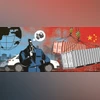
Chinese companies are redesigning magnets, rethinking manufacturing processes and changing how products are shipped, all in an effort to maintain access to Western buyers.| Illustration: Ajaya Mohanty
Listen to This Article
Many people would say, where there is a will, there is a way. And where there are tighter controls, there is even more will to bypass them for profit. That logic is now shaping the behaviour of China’s rare-earth magnet makers, who are trying new ways to navigate a maze of export restrictions by the Xi Jinping government, using inventive legal technicalities to keep business flowing. Faced with renewed licensing rules this year that are slowing shipments for weeks, Chinese companies are redesigning magnets, rethinking manufacturing processes and changing how products are shipped, all in an effort to maintain access to Western buyers, but without breaking the law, according to a report by The Wall Street Journal (WSJ).
Rare-earth magnets are used in a wide range of products, including cars, wind turbines, robotics, industrial machinery and defence equipment, and China dominates production of both rare earths and the magnets made from them (around 70 per cent of the global share). This has long made global manufacturers dependent on Chinese supplies.
How are Chinese firms redesigning rare-earth magnets to escape restrictions?
China introduced a new export-licensing system earlier this year, at a time when Beijing and Washington were caught in the middle of a serious tariff war. This new system slowed the flow of rare earths, creating delays and disruptions for Western companies. In October, China agreed to postpone some upcoming restrictions as part of an arrangement with the United States. However, businesses remain uncertain about whether supplies will return to previous levels.
According to WSJ, one major change has come through technical adjustments to magnet formulas. For example, certain powerful magnets typically include small quantities of heavy rare-earth elements, particularly dysprosium and terbium. These additives help magnets function at high temperatures. However, Chinese rules introduced in April require export licences for magnets containing even small amounts of these materials, and approvals can take weeks or months.
As a result, Chinese companies are working to produce magnets that do not use these restricted elements. Manufacturers are using methods such as grinding the material extremely fine to improve heat resistance. This requires specialised machinery and increases production costs. While research into these alternatives has existed for years, the new export rules have created fresh urgency, the report stated.
Also Read

 "Adani Green Energy solar project, 7 GW solar power project, Andhra Pradesh solar energy, Azure Power PPA transfer, SECI solar projects, CERC solar ruling, solar power regulatory approval, Adani Green Energy SECI deal, 2.3 GW PPA Adani, solar energy I")
 "renewable energy, wind energy")
 "Tesla, Tesla Inc")
 "Pakistan, Pakistan flag")
 "coworking space, office space, hospitality, Retail Industry")
The resulting products are generally designed to operate at temperatures of up to around 300 degrees Fahrenheit. This performance is suitable for home appliances, though industries such as automotive and aerospace often need higher tolerance levels. ALSO READ | Cabinet approves ₹7,280 crore plan to build rare earth magnet capacity
Which new magnet grades are Chinese producers promoting to meet export rules?
Several large Chinese producers are also promoting magnets that are free of restricted heavy rare earths. Companies including Yonjumag, Anhui Hanhai New Material, Zhaobao Magnet and X-Mag have stated they are developing new grades designed to avoid materials covered by the licensing rules. Some of these companies have presented technical data on the performance of these products and described them as responses to tightening export regulations, WSJ said.
Chinese companies are also experimenting with changes to how products are delivered. While the export of rare-earth magnets is restricted, the export of many applications that use them, such as motors, is not. Some producers are therefore working with domestic parts manufacturers to ship motors and other components with magnets already embedded. This approach allows companies to legally export products that incorporate magnets without applying for licences.
Why are Western buyers accepting reduced-quality magnets amid supply constraints?
The report noted that many Western companies continue to buy these magnets despite concerns that performance may not match traditional products. Traders cited by WSJ said that customers are willing to accept slight reductions in performance because supply is constrained.
How has China tightened export controls on critical minerals and rare earths?
In July 2023, China imposed export licensing on multiple gallium and germanium products used in chips, requiring disclosure of end-users and end-uses before approval. In October of the same year, Beijing added export controls on high-purity synthetic graphite and natural flake graphite, making permits mandatory for key battery-grade grades.
From late 2024, it escalated to a formal ban on exports of gallium, germanium, antimony and certain “superhard materials” to the US, framed as a national-security response to US semiconductor controls.
China has long capped and licensed rare-earth exports, but this year it broadened controls to 12 elements and also to mining, refining and magnet-making technologies, with extra scrutiny for semiconductor and defence users. The new rules require licences for any export of goods containing more than a low threshold of Chinese rare-earth content or produced with Chinese processing technology, and they prohibit Chinese entities from overseas rare-earth mining and magnet projects without state approval.
More From This Section
 "Israel Flag, Israel")
 "pakistan Flag")
 "thailand floods")
 "The charred buildings of Wang Fuk Court housing complex following a deadly fire, in Tai Po, Hong Kong, China, November 28, 2025 | REUTERS")
 "semiconductor, chip")
Don't miss the most important news and views of the day. Get them on our Telegram channel
First Published: Dec 02 2025 | 2:30 PM IST