


China's Li Qiang puts factory boom down to hard work, not subsidies
Li's unusually frank remarks were made during a long speech to European businesspeople at a symposium in Beijing's Great Hall of the People that was also attended by Chinese Commerce Minister
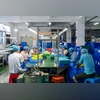 "chinese factory, china workers, working")
With domestic demand still anemic amid a property slump, industrial production has been expanding faster than consumer spending while worsening competition among companies | Image: Bloomberg
Listen to This Article
China’s second-in-command Li Qiang had a self-deprecating response when confronted with criticism from a top European Union official that Beijing’s government subsidies played a role in contributing to global imbalances in manufacturing output and demand.
The winning formula is working hard — perhaps too hard.
“Right now, many companies — especially in manufacturing — feel quite deeply that China’s manufacturing capacity is so strong, and the Chinese people are incredibly diligent,” Li said at the closing of an EU-China summit in Beijing on Thursday. “Factories run 24 hours a day.”
China’s premier added that “some feel that this created new issues for the balance of global supply and demand.” But that’s “a separate issue, and we’re aware of it,” he said.
Also Read

 "rare earth magnets")
 "china european union, china EU,")
 "India china")

The rejoinder is unlikely to convince European Commission President Ursula von der Leyen, who made overcapacity in China’s economy a central issue of her visit. China’s newly won dominance in global manufacturing has partly come at the expense of countries like Germany, with risks for Europe on the rise as Donald Trump’s tariffs steer exports away from the US.
“The subsidized production does not match the domestic demand in China, and therefore overcapacity produced here goes to other markets,” von der Leyen told reporters later on Thursday. “But the more other markets restrict Chinese exports, the greater the risk of trade diversion and pressure on the European Union’s single market, and this puts our own industrial competitiveness at risk at a time when we are making significant investments.”
Li’s unusually frank remarks were made during a long speech to European businesspeople at a symposium in Beijing’s Great Hall of the People that was also attended by Chinese Commerce Minister Wang Wentao.
The comments followed an apparent attitude shift in Beijing when it comes to the hyper-competition that’s been blamed for dragging down prices and profits across industries.
Top officials led by Xi recently signaled they may finally tackle what’s known in China as “involution,” or deflationary price wars, prompting speculation over a major reform to reduce overcapacity akin to efforts a decade ago.
China has one of the longest average working hours per week of any major economy, currently reaching almost 49 hours from 46 in 2019.
The government on Thursday began seeking public views on proposed amendments to China’s pricing law, which took effect in 1998 and now appears outdated given the drastic change in the economy since then.
The International Monetary Fund, in its annual review of China last year, estimated the country has adopted around 5,400 subsidies from 2009 to 2022, two-thirds of the measures introduced by all Group of 20 economies combined. Chinese exports of subsidized products are 1 per cent higher than those of non-subsidized products, according to the IMF.
Apart from the role played by state-backed investment, China’s factory prowess has grown thanks to a number of factors ranging from Covid-era disruptions of supply chains to Beijing’s planning and technological breakthroughs.
But with domestic demand still anemic amid a property slump, industrial production has been expanding faster than consumer spending while worsening competition among companies.
The imbalance in output and consumption in the world’s second-largest economy has led to the longest streak of deflation in decades, hurting corporate profits and workers’ income.
On Thursday, Li used the occasion to defend against criticism that China used subsidies to boost its manufacturing power, saying the country is not as wealthy as Europe.
“We can’t afford to do that,” he said. “We wouldn’t foolishly use hard-earned fiscal funds to subsidize products and then sell them overseas for foreigners to enjoy. That’s just not something we would do.”
More From This Section
 "trade, import, export, container, shipping")
 "trade, import, export, container, shipping")
 "coral bleaching")
 "Iran, Iran flag")
 "Donald Trump, Trump")
Don't miss the most important news and views of the day. Get them on our Telegram channel
First Published: Jul 25 2025 | 12:29 PM IST