


China lifts gallium, germanium export curbs to US amid trade thaw
Beijing's move to lift export restrictions on key semiconductor minerals until 2026 signals a thaw in US-China trade tensions after the leaders' meeting in Busan
 "Donald Trump, Trump, Xi Jinping")
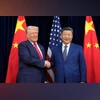
US President Donald Trump, left, and Chinese President Xi Jinping shake hands before their meeting at Gimhae International Airport in Busan, South Korea, Thursday, Oct. 30, 2025. (Photo:PTI/AP)
Listen to This Article
China’s Ministry of Commerce on Sunday announced the suspension of its ban on approving exports of dual-use items related to gallium, germanium, antimony and super-hard materials to the United States, according to Reuters.
The suspension will remain in effect until November 27, 2026, easing one of the most contentious points in the US–China technology and trade dispute.
What’s the latest
The export ban, introduced in December 2024, had been Beijing’s response to Washington’s expanded export controls on advanced chips and manufacturing equipment. Those measures had aimed to limit China’s access to technologies used in semiconductors, artificial intelligence and defence.
China retaliated by curbing exports of critical minerals, including gallium, germanium and graphite, which are vital for chipmaking and electric vehicles.
Also Read

 "Jensen Huang, Jensen, Nvidia")
 "rare earth minerals, rare earths")
 "artificial intelligence, AI,")
 "Xi Jinping, Jinping, China President, Donald Trump")
 "Donald Trump, Trump")
On Friday, China also suspended other restrictions introduced on October 9 involving rare earth and lithium battery material exports.
The decision follows a meeting between US President Donald Trump and Chinese President Xi Jinping in Busan, South Korea, where both sides agreed to a one-year trade truce. Under the deal, Beijing committed to easing export restrictions, while Washington agreed to reduce certain tariffs.
Why it matters
Gallium and germanium are strategic raw materials used in semiconductors, fibre optics, solar panels, and defence systems. China’s dominance in their production is roughly 98 per cent of global primary gallium supply, according to the Centre for Strategic and International Studies (CSIS).
The export ban had forced American firms to seek alternative suppliers in Europe and Southeast Asia.
Thaw in US–China relations
The Busan summit between Trump and Xi marked a tentative easing of years-long tensions over trade, technology, and geopolitics.
As part of the agreement, the US pledged to reduce the so-called ‘fentanyl-linked’ tariff and lower baseline tariffs on certain Chinese imports. In return, Beijing agreed to relax export curbs on gallium, germanium and other strategic minerals.
More From This Section
 "Shoppers inside a grocery store in the Bronx borough of New York")
 "COP30, COP30 COP30 U.N. Climate Summit")
 "Donald Trump, Trump")
 "gaza, palestine")
 "typhoon, vietnam, Typhoon Kajiki")
Don't miss the most important news and views of the day. Get them on our Telegram channel
First Published: Nov 09 2025 | 2:09 PM IST