


Donald Trump's proposed tariffs risk $29,000 rise in US home building costs
Housing inflation has remained stubbornly high month after month amid a national shortage, becoming a major issue for voters in the recent election
 "Construction, US home builing, home")
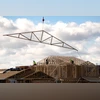
Current lumber inventories may only last one to two months, even with demand still weak and the US not yet in its peak building season | Image Credit: Bloomberg
Listen to This Article
By Ilena Peng
President Donald Trump’s tariff plans threaten to raise US home construction costs, making it even more difficult for Americans already facing a tight housing market.
Trump’s proposed 25 per cent tariffs on goods from Canada and Mexico, which have been delayed until at least March, along with a 10 per cent levy now in effect on products from China, could make building a typical home as much as $29,000 pricier, said David Belman, a second-generation homebuilder in Wisconsin.
A large portion of that increase — as much as $14,000 — would come from the tariff on Canada, said Belman, whose supplier receives 80 per cent of its lumber from the country. Canada, which is the US’s biggest foreign lumber supplier, has already been dealing with higher duties on its shipments that started last summer.
Meanwhile, tariffs on Mexico may raise costs for other materials like gypsum used in drywall, and China supplies fixtures like appliances and countertops, Belman said.
Also Read

 "US President Donald Trump")
 "Marco Rubio")
 "Tulsi Gabbard")
 "Donald Trump, Trump")
“The hard part is it hurts the beginning buyer, the first-time homebuyer,” Belman said. “That’s going to reduce housing affordability, and that’s obviously something we as builders are all concerned with.”
Housing inflation has remained stubbornly high month after month amid a national shortage, becoming a major issue for voters in the recent election. Higher interest rates have further pressured construction. While increases in housing prices have recently showed signs of cooling, some of Trump’s proposals including tariffs could further threaten affordability.
The inflationary risk is at odds with an executive order Trump issued on his first day in office to lower housing prices, according to the National Association of Home Builders. More than 70 per cent of US softwood lumber and gypsum imports come from Canada and Mexico, respectively, the Washington-based group said.
“Tariffs on lumber and other building materials increase the cost of construction and discourage new development, and consumers end up paying for the tariffs in the form of higher home prices,” NAHB Chairman Carl Harris said in a statement. The trade association has sought an exemption for building materials.
To be sure, lumber is one of many construction inputs. Zoltan van Heyningen, the executive director of the US Lumber Coalition, said in a Monday press release that the cost of lumber makes up about 1.3 per cent of the total cost of an average new home, and “doesn’t move the needle” on overall prices.
The idea that existing “duties or President Trump’s tariffs on unfairly traded Canadian lumber imports would cause lumber prices to dramatically increase home prices is nonsensical,” van Heyningen said.
Trump, who has used tariff threats as a negotiation tool, on Monday agreed to delay levies against Mexico and Canada for one month. Companies across borders, though, are already reacting.
Some Canadian lumber mills have told customers that they will raise prices by 25 per cent if tariffs are put in place, according to Russ Taylor, a forestry consultant based in British Columbia. That has US companies holding back on purchasing, hoping for short-lived tariffs or other distribution channels, said Crystal Gauvin, a senior economist at Forest Economic Advisors.
Current lumber inventories may only last one to two months, even with demand still weak and the US not yet in its peak building season, said Dustin Jalbert, senior economist at commodity pricing agency Fastmarkets.
“It’s not going to take long for prices to have to start moving higher here to keep the supply chain stocked,” Jalbert said.
Lumber futures in Chicago slumped 4.6 per cent Tuesday on news of tariff delays, erasing gains from the previous two sessions. Shares in Canadian lumber producers have slid since November as potential tariffs add further pressure on an industry already struggling amid higher US duties. West Fraser Timber Co. ended lower in Toronto on Tuesday, while Canfor Corp. and Interfor Corp. rose.
Trump said at the World Economic Forum last month that the US doesn’t “need their lumber because we have our own forests.”
Those are largely concentrated in the US South, which has already been expanding production in recent years, and in the Pacific Northwest, said Rajan Parajuli, an associate professor of forest economics and policy at North Carolina State University. But timber harvesting is costly, and the current US supply chain is limited. Shipments from Europe, meanwhile, are too small to offset a loss in Canadian supplies, he said.
“I don’t think overnight or even in a month, even a year, we can replace Canadian lumber coming to the US,” Parajuli said.
More From This Section
 "Donald Trump, Trump")
 "Donald Trump, Trump")
 "Deepseek, China's AI")
 "Elon Musk, Musk")
 "plane crash")
Topics : Donald Trump Trump Inauguration 2025 Donald Trump administration Construction sector Trump tariffs
Don't miss the most important news and views of the day. Get them on our Telegram channel
First Published: Feb 05 2025 | 8:31 AM IST