


Investigation continues into Pennsylvania steel plant blast that killed 2
An explosion at a US Steel plant near Pittsburgh left two dead and sent at least 10 to hospitals Monday and heavily damaged the sprawling facility, officials said
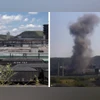 "clariton coke works plant, steel plant explosion, pennsylvania, pollution")
The rumbling from the explosion, and several smaller blasts that followed, jolted the community about 24 kilometres southeast of Pittsburgh (Photos by Quinn Glabicki for Public Source and Breathe Project)


Listen to This Article
An explosion rocked a steel plant outside Pittsburgh on Monday, leaving two dead and 10 others injured, including a person who was rescued from the smoldering rubble after hours of being trapped.
The explosion sent black smoke spiralling into the midday sky in the Mon Valley, a region of the state synonymous with steel for more than a century.
Allegheny County Emergency Services said a fire at the plant in Clairton started late Monday morning. Officials said they had not isolated the cause of the blast.
The rumbling from the explosion, and several smaller blasts that followed, jolted the community about 24 kilometres southeast of Pittsburgh.
Also Read

 "steel, steel industry")
 "Sai Life Sciences")
 "us steel, nippon steel, united states flag, steel")
 "US Steel, US Steel Corp")
It felt like thunder, Zachary Buday, a construction worker near the scene, told WTAE-TV. Shook the scaffold, shook my chest, and shook the building."
Investigating the blast's cause
At a news conference, Scott Buckiso, US Steel's chief manufacturing officer, did not give details about the damage or casualties, and said they were still trying to determine what happened. He said the company, now a subsidiary of Japan-based Nippon Steel Corp., is working with authorities.
Allegheny Health Network said it treated seven patients from the plant and discharged five within a few hours. University of Pittsburgh Medical Center said it is treating three patients at UPMC Mercy, the region's only level one trauma and burn centre.
According to the company, the plant has approximately 1,400 workers.
In a statement, the United Steelworkers, which represents many of the Clairton plant's workers, said it had representatives on the ground at the plant and would work to ensure there is a thorough investigation.
David Masur, executive director of PennEnvironment, an environmental group that has sued US Steel over pollution, said there needed to be a full, independent investigation into the causes of this latest catastrophe and a re-evaluation as to whether the Clairton plant is fit to keep operating.
US Steel CEO David B. Burritt said the company would investigate.
It's not the first explosion at the plant. A maintenance worker was killed in a blast in September 2009. In July 2010, another explosion injured 14 employees and six contractors. According to online OSHA records of workplace fatalities, the last death at the plant was in 2014, when a worker was burned and died after falling into a trench.
After the 2010 explosion, the Occupational Safety and Health Administration fined US Steel and a subcontractor $175,000 for safety violations. US Steel appealed its citations and fines, which were later reduced under a settlement agreement.
In February, a problem with a battery at the plant led to a buildup of combustible material that ignited, causing an audible boom, officials said. Two workers received first aid treatment but were not seriously injured.
Air quality concerns
The plant, a massive industrial facility along the Monongahela River, is considered the largest coking operation in North America and is one of four major US Steel plants in Pennsylvania.
The plant converts coal to coke, a key component in the steel-making process. To make coke, coal is baked in special ovens for hours at high temperatures to remove impurities that could otherwise weaken steel. The process creates what's known as coke gas made up of a lethal mix of methane, carbon dioxide and carbon monoxide.
The county health department initially told residents within 1.6 kilometres of the plant to remain indoors and close all windows and doors, but lifted the advisory later Monday. It said its monitors didn't detect levels of soot or sulphur dioxide above federal standards.
The US Steel buyout
In June, US Steel and Nippon Steel announced they had finalised a historic partnership, a deal that gives the US government a say in some matters and comes a year and a half after the Japanese company first proposed its nearly $15 billion buyout of the iconic American steelmaker.
The pursuit by Nippon Steel for the Pittsburgh-based company was buffeted by national security concerns and presidential politics in a premier battleground state, dragging out the transaction for more than a year after US Steel shareholders approved it.
(Only the headline and picture of this report may have been reworked by the Business Standard staff; the rest of the content is auto-generated from a syndicated feed.)
More From This Section
 "Pedestrians walk past the US Capitol in Washington, DC")
 "south korean president, Lee Jae-myung, donald trump,")
 "Donald Trump, Trump")
 "Shooting, Gun")
 "Donald Trump, Trump")
Don't miss the most important news and views of the day. Get them on our Telegram channel
First Published: Aug 12 2025 | 9:34 AM IST