


What are sleeper cells and why Iran's threat has Washington on alert?
Iran warned of sleeper cells in the US before nuclear site strikes; fears grow over covert agents linked to Hezbollah lying in wait to retaliate as US heightens security nationwide
 "US Iran,")
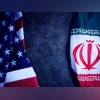
Several media reports have suggested that sleeper cells linked to Hezbollah, a Lebanon-based militant group with strong ties to Iran, may already be present in the US. | Photo: Shutterstock
Listen to This Article
Just days before the United States (US) launched military strikes deep inside Iran—targeting critical nuclear facilities at Fordow, Natanz, and Esfahan—Tehran reportedly delivered a chilling message: it could activate sleeper cells embedded within the US.
According to an NBC News report, the warning was passed to US President Donald Trump via an intermediary during the recent G7 summit in Canada. The message arrived as regional tensions flared, with Iran and Israel engaged in a rapidly intensifying conflict.
What are sleeper cells?
Sleeper cells are covert operatives—typically associated with foreign governments or extremist groups—who live inconspicuously in a host nation. These agents lead seemingly normal lives, integrating into local communities without raising suspicion. However, when triggered, they can execute missions involving espionage, sabotage or even direct attacks.
Several media reports have suggested that sleeper cells linked to Hezbollah, a Lebanon-based militant group with strong ties to Iran, may already be present in the US. Hezbollah is widely regarded as Iran’s most powerful and capable non-state ally.
Also Read

 "Vladimir Putin, Abbas Araqchi")
 "electric plane, beta technologies")
 "Delhi University, DU")
 "Salman Khan")
 "Workplace stress")
US agencies raise internal threat level
Even before the airstrikes on Iran’s nuclear infrastructure, FBI Director Kash Patel had reportedly authorised surveillance on suspected sleeper agents, according to The Independent. Following the attacks, the internal alert status across US federal agencies was raised significantly.
US Customs and Border Protection (CBP) has acknowledged that the risk posed by sleeper cells is “higher than ever”. While no specific or credible threat has been confirmed, CBP officials noted that “thousands of Iranian nationals” have recently crossed illegally into the US—a pattern being closely scrutinised by intelligence units.
Military escalation raises domestic security concerns
On Saturday, the United States joined Israel in a coordinated assault on Iran’s nuclear capabilities. The strikes were a direct response to Iran’s continued backing of regional militias and its advancing nuclear ambitions. Israel had initiated its own military operations on 13 June.
During the G7 summit, Western leaders collectively condemned Iran’s destabilising actions in the region. Tehran’s warning about sleeper cells was reportedly delivered during the same gathering, heightening concerns in Washington.
A potential domestic battlefield
As tensions surge abroad, US intelligence and counter-terrorism forces are increasingly focused on a potential internal threat. If activated, sleeper cells could represent a covert and highly dangerous extension of the Iran–US conflict.
These operatives, embedded within American communities, may turn out to be a critical component in Tehran’s strategy—raising the spectre of violence not only in West Asia but also within US borders.
(With agency inputs)
More From This Section
 "Fordow underground complex")
 "Artificial Intelligence, AI")
 "Oman")
 "Isfahan Nuclear Technology Center")
 "Russia Ukraine conflict, Russia Ukraine")
Don't miss the most important news and views of the day. Get them on our Telegram channel
First Published: Jun 23 2025 | 6:11 PM IST